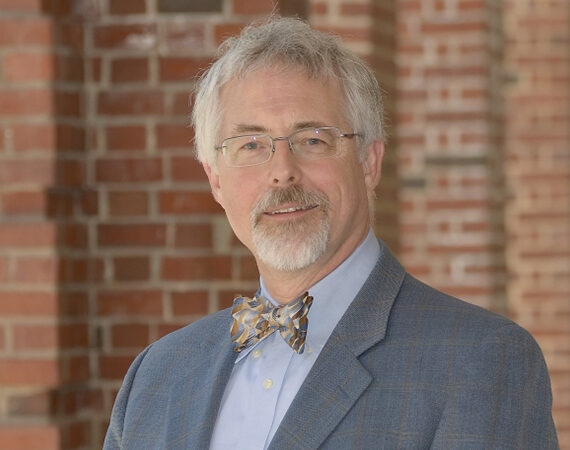
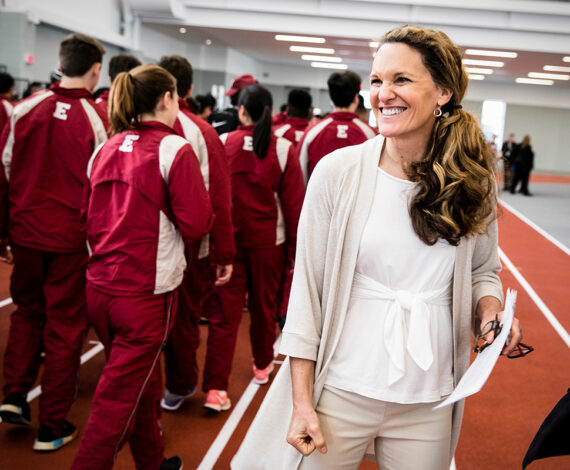
“Teaching at the Harkness table is about listening for what Ariel Levy calls an essay’s “beating heart.” It’s about attending the “whole language” of not only the text but also the collective at the table. There is no single heartbeat. No certain one either. But somewhere along the way if I’ve created space for a certain student to be heard or a certain student to be vulnerable, we all stop trying to ‘sound as though [we] know what [we’re] talking about.’ Collaboration does not show off. Rather, it shows us that our readings are stronger when they include all of our real and honest and uncertain voices.”
Barbara S. Desmond
Chair of the Department of English, Cowles Distinguished Professor in Humanities
Education
M.Philosophy Yale University
All But Dissertation Yale University
B.A. Wellesley College
James A. DiCarlo
Instructor in Science
Education
M.S. Stanford University B.A. Dartmouth College
Elizabeth M. Dolan
Dean of College Counseling
Education
B.S. SUNY Brockport M.A. Tufts University
Alexa D. Caldwell
Chair of the Department of History
Education
B.A. Brown University – PLME
M.Ed. Vanderbilt University
“Growing up I always loved mysteries and detective work, and I think history as a subject is very similar to that. You learn how to weigh and compare primary source voices and perspective with others’ research to find and create your own understanding of the past. I also love how history teaches perspective and empathy, and I love thinking about what motivates individuals and groups of people.”
Michele L. Chapman
Instructor in Science
Education
B.S. Duke University M.S. University of Wisconsin – Madison
Townley W. Chisholm
Instructor in Science, Independence Foundation Distinguished Professorship
Education
B.A. Harvard University
M.S. University of Oxford
Evelyn M. Christoph
Instructor in Modern Languages, Lee C. Bradley III, Class of 1943, Academy Teaching Chair
Education
A.B. Brown University
All But Dissertation New York University
M.A. New York University
“We have wonderful students at PEA. They are not only amazingly talented, but they are genuinely good human beings. Discussing French literature with 12 perceptive, engaged teenagers is sheer joy. I cannot imagine a more rewarding learning environment.”
Mark A. Cleveland
Instructor in Music
Education
Diploma Boston University B.M. Westminster Choir College
“It is my hope that each student, in our mutual effort to experience the fullest expression of one’s potential, will leave the Academy with a life-long appreciation of music, particularly vocal music, and will be actively engaged in the arts.”