Phillips Exeter Academy

Global citizen

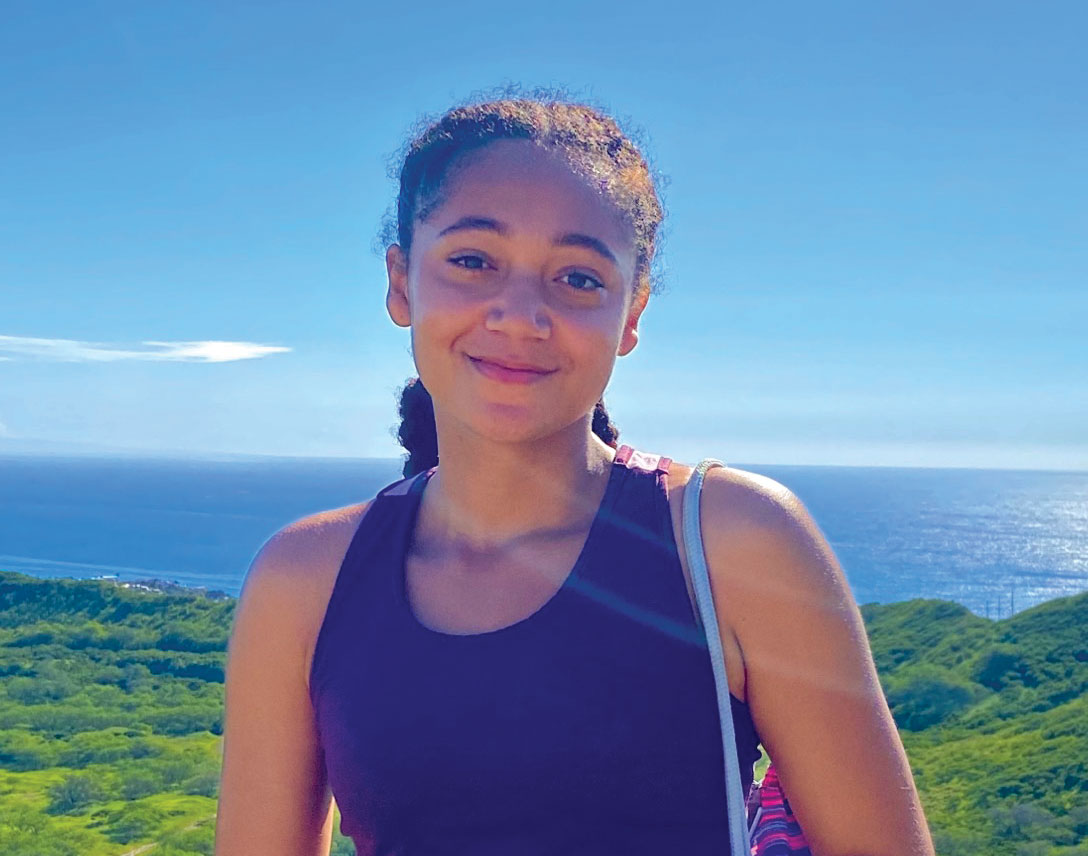
When I first learned about the Perrin Fellowship, which gives the recipient a grant for independent postgraduate study, I thought of my grandparents. If they hadn’t left their respective homelands for new educational opportunities, I wouldn’t be here. Because of them, my family is a mixture of different cultures, nationalities and ethnicities. My grandparents were the ones who assured me it was OK to leave home at 14 to attend Phillips Exeter Academy. They have taught me to unabashedly pursue the world, to find love in new languages and to empathize with cultures I didn’t understand.

THE PLANNING PROCESS

When I accepted the Perrin Fellowship, in April 2021, I had just received my first COVID vaccine shot. The overwhelming feeling at the time was positive. Borders would open by the summer. Graduation was in-person and maskless. Unfortunately, that perspective was exceedingly optimistic.

When I began to make travel plans in late July and early August, I contacted dozens of university professors from countries across the globe with specializations in anthropology, history, political science and archaeology. I desired to secure a position as a research assistant or an intern, so that I would have a knowledgeable mentor and vast resources to help guide my exploration. As an 18-year-old solo female traveler, I thought staying on a university campus for a few months, rather than traditional globetrotting, would be the safest bet for both COVID and personal security. And even though it would be more difficult, I wanted to explore cultures that are harder to access, like those in Africa and Polynesia.

I received a surprising number of welcoming and enthusiastic responses from universities in South Africa, Ghana, Nigeria, Senegal, Mexico, Peru, Australia, Aotearoa (New Zealand), Papua New Guinea, Fiji, Samoa, Tonga and French Polynesia. But as the Delta variant shocked the world, those enthusiastic yeses turned into apologetic noes. By mid-August, a cycle kept repeating itself: A professor would say yes, I would meet with them over Zoom and begin setting plans, then receive the fateful email. At one point, I received 12 refusals in one week. And as someone who had just escaped the unprecedentedly competitive college admission cycle unscathed, that level of rejection felt soul crushing.

But there was one Nigerian university that remained consistently supportive in having me as a visiting researcher. Set in the heart of the ancient Oyo Empire, the university had a botanical garden, a zoo, a dam and multiple security checkpoints. I would be studying under a professor in both Nigerian history and development studies, and I was incredibly excited. Nigeria was high on my list to visit because of the impact of neocolonialism.

I also knew a little bit about the Oyo Empire from one of my Exeter English projects. It was a vast and complex empire before colonization, and aspects of the culture were still prominent across West Africa today. I would also be the first in my family to step back on the African continent. So, in late August, I agreed to visit for two months starting in October.

Planning for a two-month stay in a developing country was a big undertaking. This included multiple vaccinations, personal security considerations and proper documentation. At one point, I had to fly down to the Nigerian Consulate in Washington, D.C., to fight for my visa. Due to COVID, Nigeria was accepting only essential travel, and on a case-by-case basis. I would not take no for an answer, and I told them I would not leave the building without a visa. Finally, after months of planning and two rescheduled flights, I boarded a plane for Lagos in mid-October.

One of the buildings on the Nigerian university campus.

A market I passed through in Lagos on my way up to the university.

Nigeria

One of the first monumental shifts in my understanding happened on my first day out of quarantine during a tour of the campus. My tour guide and I were walking along one of the trails in the botanical garden and I asked her if I would be allowed to go on runs there. She looked at me confused, and I explained that I usually jog during the mornings as a form of exercise. She then gave a little laugh and explained, “Here in Nigeria, people do not go on runs. If you have enough food to eat, if you are full, what business do you have going and making yourself hungry again?” That’s when I realized I was in a very different place than I had ever experienced. 

The incredible professor I worked with shared vast amounts of knowledge and resources about Nigeria. I began to learn basic Yoruba, which was exciting for me as a language enthusiast. I also had the opportunity to attend an interview with the Alaafin (king) of the Yoruba people, where he discussed current political and cultural affairs. I learned about the importance of religious and cultural leaders in Nigeria. Even though the Oyo Kingdom no longer controls the government, it has a large amount of political and cultural influence over the people. Cultural leaders are often overlooked, but they are the heart of their people.

I also attended development classes during my stay at the university. One of my favorite classes at Exeter was Dr. Russell’s “Why Are Poor Nations Poor?”, which offers an introduction to development studies. Even though in both classes we learned the same models, the way the Nigerian professor and students analyzed development was completely different. For one thing, the Nigerian students acknowledged problems in developed countries that Nigeria does not have. One student brought up the issue of obesity in the United States. Everyone in the U.S. has a car, while most people in Nigeria walk, they said. The U.S. also doesn’t have localized agriculture, so food contains preservatives so it can travel across large distances. This can lead to heart problems, cancer, diabetes and obesity. When the students were imagining a further-developed Nigeria, they were not glorifying countries like the U.S. and treating them as the standard. Instead, they designed their own standard for Nigeria’s future.

Overall, my experience in Nigeria was completely unforgettable, but unfortunately, it wasn’t the right time for me to be there. From when I agreed to visit in late August to arriving in mid-October, the civil situation in Nigeria had significantly eroded. Their COVID positive rates were still well below the global average, but terrorist and kidnapping activity in northern Nigeria had increased. Civil unrest was on the rise, and would only grow more violent during my time there, most notably during the EndSARS protests against police brutality.

There were multiple unsafe encounters on campus, along with serious political unrest. I had to make the incredibly difficult decision to stay and continue the amazing research I was doing or to leave. It was one of the hardest decisions of my life because if I stayed, I would risk my safety, but if I left, I would destroy the relationship that I had spent the past three months cultivating.

This was the first time I had ever experienced true diplomacy. I juggled meetings, emails and speeches with my adviser, the professor, university officials, the fellowship committee and my freaked-out parents. In the end, I decided to leave, and the university decided to cut ties. I no longer had a place to stay, and I had to leave the country in 48 hours due to COVID testing requirements. I was originally not allowed to board the flight due to my last-minute booking. I almost didn’t make it home.

THE CHANGE OF PLANS

That experience was devastating to me for multiple reasons. Not only was it an incredibly traumatic experience, but it was also a destruction of ideals. Every time I had to explain what happened, I was adding to the narrative that developing countries were unsafe, violent and desolate places. As a Black person, who has fought their whole life against the idea that my people are inherently dangerous, I felt like I failed. In all my 18 years, I have always tried to see the good in the world, so it was very hard to lose some of that hope.

In retrospect, I do think I was too young, naive and inexperienced to travel to Nigeria alone, especially during a global crisis. I thought my experiences staying with family in the Caribbean and South America would prepare me, but I was wrong. I should have followed the advice of the U.S. government and loved ones and replanned a trip in a more politically stable country.

Throughout the holidays, I fought a failure mindset. I decided to move out of my bedroom because that was where I’d spent much of the rejection-filled August. I started trauma therapy, which had its positive and negative effects. Omicron arrived and cases skyrocketed globally. Borders closed again, severely limiting where I could travel. But through it all, I was determined to continue this fellowship.

HAWAII

Back in August, many Australian and Polynesian professors had given me contacts at the University of Hawaii at Manoa. UHM prides itself on being the leading Indigenous institution in the U.S. The Hawai‘inuiākea School of Hawaiian Knowledge continues to be the center of modern Hawaiian scholarship. However, I had never truly considered visiting. The Perrin Fellowship is supposed to push my boundaries of travel, and Hawaii, being a U.S. state, always felt too safe. More importantly, I had always found the story of Hawaii to be upsetting. I knew of the illegal overthrow of the Hawaiian Kingdom by the U.S., the over-tourism problems and the commodification of Hawaiian culture. As someone whose family hails from independent island nations, I had always silently considered Hawaii to still be under colonial rule. Considering the sandy beaches and smiling hula dancers presented in pop culture, it was tremendously depressing. However, after finding all the great academic works that came out of the Hawaiian Sovereignty Movement and the Hawaiian Renaissance, I decided to go.

I reached out to Jamaica Heoli Osorio because she is a Stanford alum and kumu (professor) of political science at UHM. I soon found out that she is an award-winning Native Hawaiian poet, activist scholar and an unapologetic Hawaiian nationalist. She graciously let me audit her spring semester Native Hawaiian Politics class.

The class focused on the change of governance, culture and land over Hawaii’s history. Kumu Osorio started with the pillars of pre-contact society, such as the importance of genealogy, the Akua (religious pantheon) and societal structure. She then moved through the history of colonization and military occupation, and how it impacts current events like homelessness and public health. Now we’re learning about the legal theories of Indigenous self-governance and land restitution. We’ve read the great academic works of Native Hawaiian scholars such as Trask, Pukui, Kame’eleihiwa, Young, and Osorio, all of whom push the boundaries of political science.

Many of the students in the class are Native Hawaiian, so they have a personal stake in not only the history of Hawaii but the future as well. Kumu herself does not pretend to take an objective view of Hawaiian politics. She argues that no one is truly objective, and when scholars attempt to be so, they still hold a white, Western, elitist, academic gaze. She’s shown me that my own personal connection to history and to world affairs is an advantage, not a disadvantage. I am not the same scholar walking out of her class that I was walking in.

Reading at the Hawaii Pacific Collections at UHM.

Kayaking on a weekend adventure in Hawaii.

Phillips Exeter alumni also played a huge part in the success of this leg of my trip. Kate Lingley ’89, department chair of Art and Art History at UHM, was another one of my first contacts. She gave me great advice about my trip and connected me with the Honolulu Museum of Art. There I met with Tory Laitila, head curator of Hawaiian Art and Historical Artifacts. We had a great conversation about the role of art and fashion in establishing global recognition of the Hawaiian Kingdom, and how art about Hawaii changed over the 19th and 20th centuries under U.S. rule.

I would not be in Hawaii if not for Robert Littman ’61, an award-winning UHM classics professor and archaeologist. Not only did he help me find a place to stay, but he also welcomed me into his Native Hawaiian family. From there I met Liloa Dunn, land manager and ethnobotanist at Lyon Arboretum. He cares for endangered native plants, maintains taro fields, which were the foundation for the pre-contact Hawaiian agriculture system, and creates educational activities for visiting school children. Malama ‘Aina, or caring for the land, is a pillar of Hawaiian culture. As a visitor, I am taking from the land, so I try to give back. I volunteer with Liloa at the arboretum every other week. We are currently working on rebuilding a traditional Hawaiian hale (house) using invasive species of trees, rather than endangered, indigenous ones. Studying Indigenous agricultural and architectural practices through hands-on learning has been a highlight of the year.

In March, I began working as a docent at the Queen Emma Summer Palace, a house museum dedicated to the Hawaiian monarchy. I give museum tours and help with community events like lei making, hula dancing and mele (song) performances. At the museum, I explore the idea of nationhood: how an Indigenous society gains or loses international recognition. The monarchs Westernized so much about Hawaii in order for it to be recognized as a sovereign state by Western nations. It was for a time, but then it too was colonized. An Indigenous society can check all the boxes of the Western standard and still not be independent. These are the exact ideas I set out to explore on this fellowship.

The drive up to the Hawaiian and Ethnobotany sections fo the Lyon Arboretum.

Though I originally planned to stay in Hawaii only until the end of March, I decided to extend my stay until the end of May. For one thing, I still have a dozen books to read on my ever-expanding list, and my Hawaiian-language skills are still subpar. I have only just begun working through the Hawaiian Pacific Archives Collection. And at the end of March I was invited to the Lahui Hawaii Research Conference, where professors, visiting scholars and students present research projects about the theme Mapping Aloha Aina. On the practical side, I got a part-time barista job to pay for all the fun weekend adventures my friends and I are having. My coffee shop is only a block from the beach, so I’m always facing the ocean. For the first time all year, I feel at peace.

I wanted to take a gap year because I wanted to push the boundaries of my own education. Whether I become a diplomat, an economist or an international lawyer, I want to enter that field already understanding my own biases having grown up in the West. My goal for this year was to reexamine my own understanding of the world and the way it should work. If I’m going to be working with developing countries or countries with histories of colonization, it’s not enough to learn at institutions in developed colonizer countries. No matter how much Googling I do, or how many TED Talks I listen to, the knowledge will be the most authentic at its source. Even though time and again I was pushed beyond my limits, my drive was stronger than my fear. Through all the ups and downs, I took a year to figure out what type of global citizen I want to be. I found that.

Editor’s note: This feature, a student’s firsthand account, appeared in the Spring 2022 issue of The Exeter Bulletin.
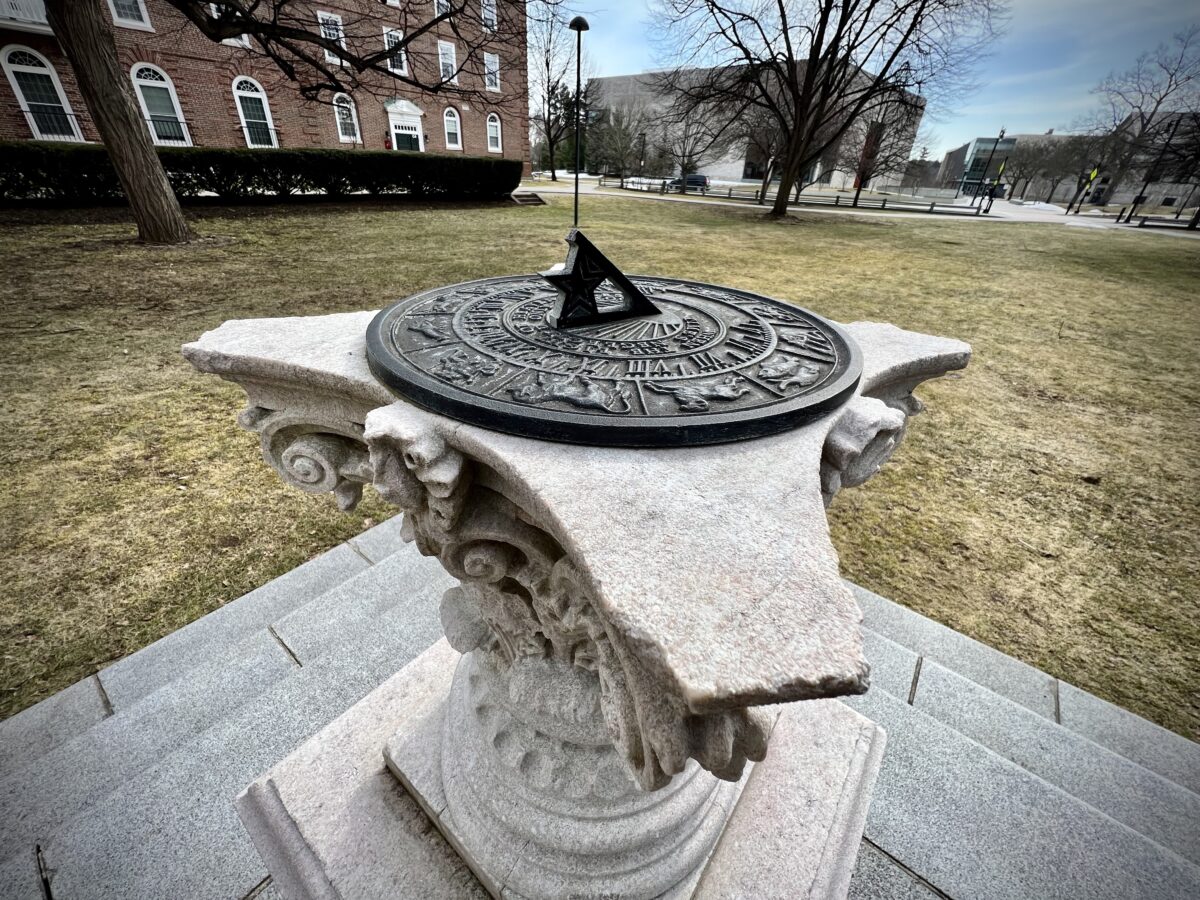
Exeter Deconstructed: The sundial

The sundial on the south side of Exeter’s campus has been telling the time of day for a century — when the sun shines, at least — but it also reflects Exeter history.

The cast-iron timepiece atop a carved stone pedestal was installed in 1925, the same year the dorms that surround it, Amen, Cilley and Wentworth halls, were dedicated. Those dorms are named for revered Exeter educators from the 19th century. The pedestal bears the names of those who paid to build the structures.

AMEN HALL

WENTWORTH HALL

CILLEY HALL

Built 1925 with gifts

from the alumni

and friends of

the Academy

whose names are

inscribed hereon

The names inscribed thereon comprise a who’s who of famed Exeter benefactors. Thomas Lamont ’88 and William Boyce Thompson ’90 were banking and finance tycoons whose donations paid for the school’s infirmary, gymnasium, administration building and numerous dorms. James Norman Hill ’89 is best known for paying for the bridge that connects campus to playing fields across the Exeter River. Edward Stephen Harkness’ legacy endures in every Academy classroom 90 years after his most impactful gift helped re-imagine PEA’s pedagogy.

Also among the 19 names are Theodore Newton Vail, the visionary leader of AT&T; Morton D. Hull ’85, a five-term congressman from Illinois; and Bradley Webster Palmer ’84, a developing partner of Gillette Safety Razor Corp. and United Fruit Company, the massive agricultural conglomerate whose outsized and often exploitative influence in Central and South America politics inspired the unflattering term “banana republic.”

The sundial, pedestal and dais were relocated from the center of the quad to be nearer to Amen Hall during a renovation in 1980.

Editor’s note: This article first appeared in the spring 2022 issue of The Exeter Bulletin.

History on the edge of the woods

Hunter Stetz squats beside a deep mud puddle in the woods, a small trowel in his hand. He sinks the trowel into the fallen leaves surrounding the hole. The tool halts with a clink.

“This might have been a chimney base,” he says.

He points to other spots around the perimeter of the soggy depression near a trailhead in the Academy Woodlands. “I think this was a cellar hole.”

A story is unfolding at the edge of these woods, a story originally told 240 years ago and now coming to light. Depending on where the tale leads, it could connect the Academy to one of the American Revolution’s more tragic heroes and offer its students the chance to study early Black American history in their own backyard. That’s because the cellar hole Stetz believes he has found might have belonged to Jude Hall.

Hall was an enslaved man who fought on the colonists’ side in exchange for his freedom. He settled in Exeter in 1783 after the war, and legend has long held that he lived with his family near a small pond next to what became Drinkwater Road. The pond today is even named Jude’s Pond.

But no house remains, and the exact location of the homestead has never been determined.

Stetz, a Hampton Falls, New Hampshire, native and a field technician for a local archaeological consultant, became intrigued with Hall’s story — and the murkiness about the home’s location — a year ago. That curiosity led him to his discovery last fall, and he notified Warren Biggins, the Academy’s manager of sustainability and natural resources. “For me, the Academy Woodlands have always seemed an ideal version of a living laboratory, and one that offers our students incredible opportunities for experiential learning across a wide variety of academic disciplines,” Biggins says. “I’m extremely excited for the potential projects and collaborations that may result from this discovery.”

Adds History Instructor Troy Samuels, a trained archaeologist: “For our curriculum, I do not think I am exaggerating when I say this offers truly transformative opportunities to expand who and what Exeter history courses discuss. … This offers a new thread for students to latch on to. In Jude Hall’s story, we are a different version of what it means to be American, to be a New Hampshirite, to be from Exeter.”

Who was Jude Hall?

Hall was born in the late 1740s. Enslaved first to the Philemon Blake family of Kensington, Hall was sold to an Exeter resident named Nathaniel Healy shortly before the start of the Revolutionary War. Slavery was legal if uncommon in the region; Exeter Historical Society records show that 38 enslaved people were among the town’s 1,741 inhabitants in 1775.

How Hall came to enlist and fight for the colonists’ cause is not entirely clear. In his book Patriots of Color, George Quintal Jr. writes, “Soon after being sold to Healy, Hall ran away from his new master. When the war broke out, he enlisted and fought on the Colonial side.” Other reports theorize that Hall may have been Healy’s proxy, fighting in his enslaver’s place in exchange for his freedom.

According to a National Park Service account, Hall enlisted on May 10, 1775 — just weeks after “the shot heard ’round the world” at Lexington and Concord. A month into his service, Hall became one of more than a hundred Black and Native American soldiers to fight in the Battle of Bunker Hill, where he narrowly missed being struck by a British cannonball. His legend, told in The History of Kensington, NH, 1663 to 1945, is that of an outstanding soldier and a mighty figure who “could lift a barrel of cider and drink from the [tap].”

Hall would serve in various Continental Army units throughout the war. While applying for a military pension in 1918 Hall testified that he reenlisted in 1776 and 1779 and served “until the peace and then was discharged.” Records show he signed for military pay several times over the eight years, and he fought in some of the most famous battles of the war, including Ticonderoga and Saratoga. In the Battle of Monmouth in June 1778, Hall is said to have earned his nickname “Old Rock” while serving under George Washington and Alexander Hamilton.

Hall returned to Exeter in 1783 — the year PEA opened its doors to its inaugural class. Now a free man, he married Rhoda Paul, a member of one of New Hampshire’s prom-inent free Black families, and by all accounts they settled beside a small pond near the Exeter-Kensington town line to farm and raise a large family.

Were his story to end there, Jude Hall would likely be a mostly forgotten figure of early America. But his tale turns tragic. Three of the Halls’ four sons — born free — were abducted and sold into bondage. From the National Park Service, citing an 1833 affidavit by the Halls’ son-in-law Robert Roberts: In 1807, their son Aaron was kidnapped in Rhode Island, “sent to sea, and has not been heard of since.” Six years later, David Wedgewood of Exeter claimed their 18-year-old son James Hall owed Wedgewood four dollars. Wedgewood had James “tied and carried to Newburyport jail, and the next morning … put on board a vessel bound for New Orleans, and sold as a slave.” At an unknown date the Halls’ son William “went to sea. … After arriving in the West Indies, [William] was sold there as a slave.”

William Hall would ultimately escape after 10 years and flee to England. Aaron and James most likely died as captives.

Jude Hall would never see or hear from his three oldest sons again. He died on Aug. 22, 1827, and was buried in Exeter. Rhoda Hall moved to Maine after his death, leaving behind the house next to the pond.

Hiding in plain sight

Today, that pond — formally catalogued by the U.S. Board on Geographic Names as “Judes Pond” — is part of the 836-acre Academy Woodlands. Over decades, the Academy acquired land straddling the Exeter River that comprises the woodlands. Most of the tract that includes the pond was received as a gift to the school in 1910. The pond sits along Drinkwater Road near an entrance to a trail network that crisscrosses the woods. The “one-story, two-room house” Hall reported owning while applying for the military pension is gone, however. Whether it was demolished, fell down or burned to the ground, the house is lost to history.

That’s where Stetz comes in. He took an active interest in finding the location of the homestead after his firm, Independent Archaeological Consulting, in Dover, New Hampshire, was unable to determine its location while working on a project at the Blake Family farm in Kensington. “I basically took it as a challenge,” Stetz says.

Stetz combed the area around the pond on foot looking for any evidence of human use on the landscape. He made use of LiDAR (Light Detection and Ranging) maps of the region that reveal what the ground surface looks like underneath vegetation. “Stone walls are a great example of things that are evident on LiDAR,” he says. “I looked for irregular depressions and checked out a few I saw on the map, but the only location that was promising just happened to be the first depression I encountered.”

He zeroed in on a sunken spot in the land near Drinkwater Road and the pond. What set apart this location from other candidates around the pond, Stetz says, is the presence of large stones surrounding the depression. “There are a few stones visible above all the dead leaves and pine needles that accumulate and decompose every year, but I stuck a thin metal rod in the ground in various places and found that there were more stones beneath the ground surface that made a rectangular shape and that there were hardly any stones within or outside of the rectangle.” Stetz estimates the rectangle to be approximately 15 feet by 18 feet.

Barbara Rimkunas, curator of the Exeter Historical Society, said there are no known records showing Hall owned a house or land in Exeter. An 1802 map of Exeter shows an unnamed road that was to become Drinkwater Road, with a few homes identified along its path. None belongs to Hall. But an 1822 murder trial offers clues as to the location of his house. Hall was called as a witness in the trial of John Blaisdell, accused of the fatal assault of John Wadleigh. His testimony, published in pamphlet form, reveals where the Hall home was in relation to some noted landmarks:

“Between 8 and 9 on the evening of [February] 18th, somebody knocked at my door. My house is near the Exeter line and about a mile and a quarter from Folsom’s. Told my children to open the door. Blaisdell came in and appeared frightened, and asked where the Captain was, (meaning me). He said, he wanted me to help lead Wadleigh in, that he was drunk and had been fighting with a sleigh. … Wadleigh’s house is between the Cove bridge and mine, about 30 rods from mine. I heard heavy groans, found the deceased, lying on his side. I lifted Wadleigh up and led him home — he appeared to shudder with cold.

“I got a fire which he seemed to need. … Blaisdell went away and wanted me to go home with him — I said don’t go, and Blaisdell said he must go to take care of his cattle. Wadleigh died about three quarters of an hour before day — I was with him at that time. Blaisdell’s house is in Kensington about a half a mile from my house.”

The 1802 map locates “Cove Bridge” along the road and “Folsom’s Tavern” at the corner of what today is Drinkwater and Hampton roads. Hall testified that “my house is near the Exeter line and about a mile and a quarter from Folsom’s.” The pond is in fact 1.2 miles from the Drinkwater-Hampton junction and approximately two-tenths of a mile from the Exeter-Kensington town line.

The trial testimony may be the best evidence and only documentation that Hall did in fact live at this location.

Is this the place?

Today the site offers no obvious clues — and little else of note to the amateur observer. White pines tower over-head, and smaller trees partially obscure the site from the trail. One could appreciate how a hundred years’ worth of visitors to the woods passed by without noticing. Determining if Stetz’s discovery has historic value ultimately will require some digging.

“I think the first step is to do some minimally invasive investigation of the area to get a sense of what we have in terms of remains,” says Samuels, the Exeter history teacher. “Once we have a general picture, I think the next steps would be excavation, working, of course, with local and regional interested groups as well as our students to tease out as much detail about the archaeological remains as possible.”

The discovery of bricks, ceramic shards, glass and nails all could offer clues that a house once stood on the site. Dating such artifacts would further pinpoint a domicile’s vintage. Sometimes, you even get lucky. “I know one homestead in which they found the initials of the suspected homeowner on a piece of bottle glass,” Stetz says.

“There are all sorts of fun techniques we could show our students and use to get as holistic a picture of what took place at the site as possible,” Samuels says. “Will any of this definitively show that this was Jude Hall’s homestead? Probably not — that type of definitive information is rare even in historic archaeology — but the more complete the picture, the more sound our hypotheses can be.”

Even the possibility that the site has historic significance is exhilarating for Samuels. The digging for history is nearly as important as its discovery. “Archaeology offers historical teaching a certain vitality; you form a different relationship with the past when you are touching it then when you are simply reading about it,” Samuels says. “I am so eager to give our students that experience, to let them actively recover history, and especially the histories of groups who have not been given a leading role in the drama that is the history of America. … The opportunity to excavate and write the material history of such a fascinating and important person as Jude Hall — and to bring students along for the ride — is kind of the archaeological dream.”

Editor’s note: This story first appeared in the summer 2022 issue of The Exeter Bulletin.

Who was Moses Uriah Hall?

The scourge of slavery stole three sons from Jude Hall, but he and his youngest son, George, left a legacy that is interwoven with the Academy’s own.

George Washington Hall was born free in 1789, one of 10 children of Jude and Rhoda Hall. His older brothers William, Aaron and James would eventually be abducted and sold into slavery. George survived and remained in Exeter after his father died and his mother moved away. He married, and with his wife raised eight children. The family lived in poverty, but the town helped to support them through a charity established to assist people of color. That generosity would help lead to a historic first: In 1858, Moses Uriah Hall, one of George Hall’s sons and Jude Hall’s grandsons, entered Phillips Exeter Academy as the first Black student to attend the school.

According to an essay by David Dixon, published in the periodical Historical New Hampshire: “In winter, presumably to help support himself, [Moses Hall] drove a sleigh borrowed from Dr. Henry French, carried his white class-mates to the academy, returned the vehicle to its owner, and then walked back to the school.”

Like his grandfather, Moses Hall eventually went to war, serving as a soldier in the Union Army during the Civil War. After the war, Moses Hall returned to New Hampshire and settled in Epping. He married Eliza Healey and worked for decades as a skilled stonemason. In her book Tales from Epping’s Past, historian Madelyn Williamson writes of the mark Hall made on the small town: “In 1915, when he was about 80 years old, Mr. Hall paved the sidewalks on Pleasant Street. Before that, he had built a wall on Prescott Road and set the foundation for a large shoe factory in Raymond, as well as for a new one here in town. He bricked up buildings, and set walkways, stairs, fireplaces and chimneys all over town. … In 1917, as our town’s oldest citizen, Moses Uriah Hall becamethe fifth recipient of our Boston Post Cane and the first African American to be so honored by Epping. Mr. Hall died at well over 90 years of age. No doubt buried with military honors, this old Civil War veteran rests from a life well lived that would have made his father and his grandfather very proud indeed.”

Editor’s note: The story first appeared in the spring 2022 issue of The Exeter Bulletin in “History on the edge of the woods.”

Searching for shipwrecks

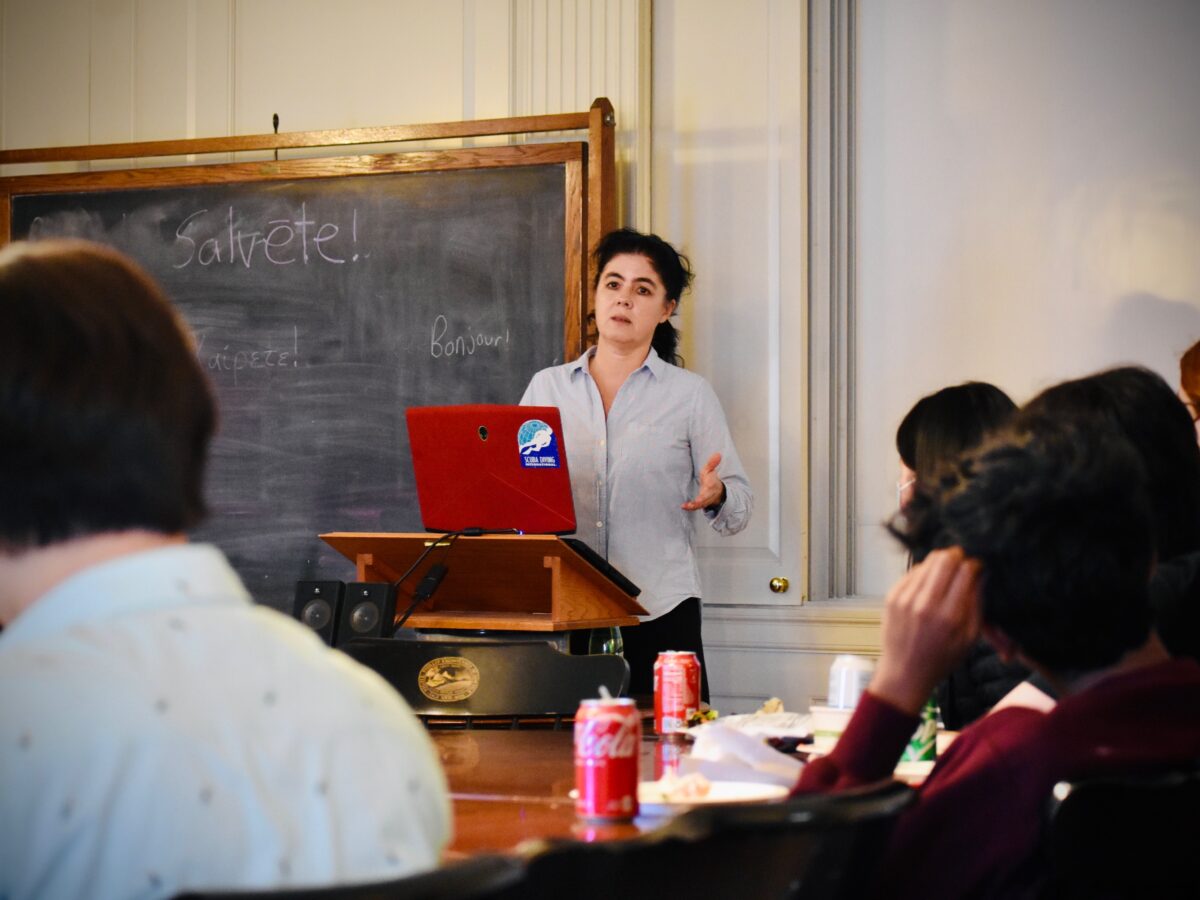
Exeter’s young classicists got a comprehensive how-to last week from underwater archaeologist Dr. Bridget Buxton, who led a series of lunch seminars in the Latin Study of the Academy Building.

Buxton, an associate professor of ancient history and Mediterranean archaeology at the University of Rhode Island, specializes in classical underwater archaeology, and is a leader in the use of robotic technology in underwater research. A native of New Zealand, she has worked on expeditions in the Mediterranean, Adriatic and Black seas, and the South Pacific Ocean, and has discovered dozens of historic shipwrecks. In addition to the four lunch seminars, she also gave a lecture on April 20 in the Elizabeth Phillips Academy Center, in which she shared her experience as lead archaeologist on the most recent expedition to the RMS Titanic.

Titled “Adventures in Underwater Archaeology,” the series in Applied Classics was presented by the Classical Languages Department and made possible by the support of the Behr Fund. Buxton’s visit highlights the department’s mission to combine Exeter students’ in-depth study of Greek and Latin language and literature with exposure to other disciplines related to the Classics field, including history and archaeology.

After sharing images and stories from some of her most memorable expeditions throughout the week, Buxton wrapped up the seminar series on Friday by speaking about “Holy Grails and How to Find Them,” described as “a workshop and Q&A on how to design, fund and lead your next Indiana Jones adventure.” The Latin Study was crowded for the event, with more than 20 students filling the Harkness table and spilling over onto surrounding chairs.

“I often get the question: ‘What’s the most amazing thing you’ve ever discovered?’” Buxton said. “It’s a very difficult question to answer because the things I’m most excited about are the things I haven’t found yet.”

Her talk mixed images of different expeditions with practical tips for how to locate potential field sites. The patterns of where ships tend to wreck, she explained, hasn’t shifted much over the centuries: They’re often found near transportation hubs, as well as islands. “Ships love crashing into islands and shores,” Buxton pointed out. “So, a place like Croatia, which has 1,300 islands, is a really good place to look for ancient shipwrecks.”

In terms of research, Buxton said the true “eureka” moments come in the library, while searching through ancient documents and maps of all different forms. “I like to do most of the research, most of the searching, before I ever go out into the field,” she stressed.

Though big expeditions cost between $50,000 to $100,000 per day, Buxton said it’s possible to fund several weeks of fieldwork for that amount in total. “Find projects, do independent studies, apply for every small grant that you can get,” Buxton advised the students. “You want a track record of taking money, spending it, accounting for it, reporting for it, so when the time comes for you to ask for the big bucks, you’ve got that track record.”

Learning a skill — such as diving, fixing ship engines, 3-D digital photo modeling or using oceanographic tools like sonar — might be the best way to pursue a career hunting down shipwrecks, Buxton added. “You find a way to start doing what you want to do, and eventually people will get to know you as somebody who they want to have on a project,” she said. “It’s really the best advice I can give, even now — volunteer, volunteer and volunteer. One day you might even get paid for what you do.”

Big Red lacrosse plays for Morgan's Message

This past Wednesday, the girls and boys varsity lacrosse programs teamed up to dedicate a game to Morgan’s Message, a foundation dedicated to eliminating the stigma surrounding mental health within the student-athlete community. Morgan’s Message, named in memory of Morgan Rodgers and the story she left behind, strives to amplify stories, resources, and expertise to confront student-athlete mental health challenges and to equalize the treatment of physical and mental health in athletics.

Exeter’s Keighley Bosshardt ’24, Kathryn Welch ’22, Emilie Dubiel ‘23, Baron Fisher ’22, Drew McClutchy ‘23, Logan Olazabal ‘23, Baron Masopust ’24 represented the girls and boys teams and worked as ambassador’s to organize the event, raise awareness, and gather donations for Morgan’s Message.

 “People, especially athletes, often overlook their mental health or tend to focus more on their physical health,” said Bosshardt, who helped champion the cause and organize Exeter’s involvement. “I think by bringing awareness and providing resources to our community, Exeter students can start having open conversations about mental health and not be scared to reach out if they need it.”

Prior to the start of each game, both teams gathered for brief remarks and a moment of silence in Rodgers’ memory. A high school lacrosse standout, Rodgers was recruited to play at Duke University. She sustained a serious knee injury prior to her sophomore season at Duke and struggled with anxiety and depression as she fought to regain her physical health. She committed suicide at 22.

“I hope that Morgan’s Message will bring awareness to our athletic community and the greater Exeter community that mental health is a challenge that we all deal with and should not be taken lightly,” Fisher said. “I hope that it will allow those students who are struggling with mental health to feel more comfortable in reaching out for help. I hope that we can honor Morgan’s life by building an even more caring and comfortable environment for student-athletes at Exeter.”

For more on Morgan’s Message, please visit their website. 

Exeter returns to the 'front lines' of climate change

Relegated to Zoom for two successive springs, Exeter on Monday brought the action back to Climate Action Day.

Hundreds of PEA students, faculty and staff fanned out across campus and locations around the Seacoast to study challenges to our environment and, in some cases, literally dig into the problem. Now in its eighth year, Climate Action Day is intended to raise awareness of climate change, teach students about their natural world and reflect on environmentalism as an integral part of human existence. This year’s programming included projects such as planting pollinator gardens and pulling invasive weeds along with a keynote address from Daniel Schrag, the director of Harvard University’s Center for the Environment.

For 2020 and 2021, Climate Action Day was contained to the virtual space. The traditional and more robust program resumed this year as the Academy continues work on an ambitious climate action plan that will set the school on a path to zeroing out its carbon footprint and setting sustainability goals for generations of Exonians to come.

‘Opportunities to lead’

The day opened with Schrag’s sobering assessment of Earth’s current and coming predicament — and of humankind’s inability to grasp the enormity of the problem.

The issue of climate change, he said, requires collective action and long-scale commitment, two things humans are not very good at.

Schrag also discussed climate injustice, something he is focused on exposing and helping to alleviate. “The issue is one of fundamental unfairness,” he said. “Most of the people affected by climate change did very little to contribute to the problem in the first place.”

He said confronting the problem of climate change requires global action, a difficult sales pitch to developing nations who are to date mostly not responsible for the carbon emissions warming the planet. “All of the countries in sub-Saharan Africa together are responsible for 1 percent of carbon dioxide emissions. Telling India, Asia or Africa they have to reduce their emissions seems a little bit capricious.”

Schrag doesn’t sugarcoat his message but he left his Exeter audience with some inspiration. “It’s really easy to feel small, powerless, throw up your hands and just see what happens,” he said. “But I think there are plenty of examples of people who have managed to inspire people to take action and change the way we think about this problem.

“There are opportunities to lead the world forward.”

Planting and plucking

After the keynote address, the Exeter community divided into small and larger groups for hands-on activities. On the south side of campus, a group of around 40 students gathered to plant trees, native shrubs and flowers behind the school’s tennis courts.

Bernadette Norton, a horticulturalist in the Facilities Management department, kicked things off by listing some of the plants that the students would be working with, including echinacea, milkweed, winterberries, bay berries and asters. Standing in a rectangular plot of straw-like grass dotted with dark green pots, she gave a brief tutorial on how to plant.

“This has got really good soil on the top part here, but the next layer will be crushed stone, and below that are bigger stones,” Norton explained. “So, when you dig the hole, you want to make sure it’s not too deep.”

After Norton’s introduction, the students got to work. “I think we have over 100 plants right now, so everybody’s expected to plant at least two,” said Armanee Stenor ’23, one of the leaders of the “Native Shrub and Pollinator Garden” project. Stenor and Ty Carlson ’22 organized the project as the service component of their Biology 470: Human Populations and Resource Consumption course.

“We’re planting flowers and a few shrubs as well, all focusing on different things that would attract pollinators,” Carlson added, referring to bees, butterflies and other pollen-carrying species that are vital to the survival of many plants and crops. “[We focused] on having a lot of flowering, a lot of different colors.”

Working alongside them in the garden was a group who signed up for a separate tree planting project, led by three students who also took Human Populations and Resource Consumption. “One of the best ways to solve climate change — at least that we can do on a small scale — is planting trees,” said Barron Fisher ’22, one of the project leaders. “We thought it’d be really fun to get out here for Climate Action Day and do a hands-on project.”

Nearby, another group of around 20 students focused on removing garlic mustard, an invasive species prevalent in the area, from along the fence lining the back of the athletic fields. As piles of the leafy greens mounted, project leader Montana Dickerson ’23 predicted that the day’s climate activism might produce an unexpected bonus. “After you pull it, you can actually use it for food,” Dickerson said, mentioning garlic mustard pesto as one potential recipe. “Hopefully we’ll be able to salvage some of this and upcycle it into something you can eat.”

Poetry: a growth industry

It can be hard to find poetry in a row of turned-over soil, but 120 members of the class of 2025 could draw the connection between the work they’re studying in the English classroom and the work they did Monday on Saltonstall Farm in neighboring Stratham.

The common text for ninth-graders this term is “Lace & Pyrite: Letters from Two Gardens,” a correspondence of poems between poets Aimee Nezhukumatathil and Ross Gay. The series of epistolary poems, exchanged in 2011 and published three years later, was written between Nezhukumatathil’s flower garden in New York state and Gay’s fruit and vegetable garden in Indiana.

On Monday, the ninth-graders’ muse was kale. Armed with scores of seedlings provided by their hosts, the students lined a long garden row and transplanted the kale, which — with the cooperation of Mother Nature — will be ready for harvest in 60-80 days. Compost was generously applied to the pipsqueak sprouts, with each prep digging their hands into a wheelbarrow filled with the rich mixture.

“What is compost exactly,” asked one wary new farmer.

“Organic material,” answered English Instructor Duncan Holcomb.

“Organic material as in …?” the inquiry continued.

“As in everything you need to create life,” Holcomb said.

After getting their hands dirty, the students heard from their hosts about crop lifecycle, pest and weed management and the fertilization their plantings require. Saltonstall Farm is owned and operated by Sophie Saltonstall ’07 and her husband, Kyle. Sophie Saltonstall — whose great uncle was the ninth principal at PEA — grew up on the farm; she is the third generation of her family to serve as steward of the property.

On the ‘front lines’

Just six miles north of campus lies the Great Bay, a 6,000-acre tidal estuary and, as Kelle Loughlin of the Great Bay Discovery Center described, an asset in navigating the effects of climate change. Speaking to a group of 20 students along the rocky shore, Loughlin explained that as ocean levels rise, in-land ecosystems that can accommodate saltwater will become the “front lines” of defense against rapidly encroaching coastlines.

Monday, the students focused their attention on land, hunting for and removing invasive species on the discovery center’s campus. Loughlin presented a slideshow of the day’s most-wanted plants, including bittersweet and wild garlic. Loughlin discussed how another invasive species in the area, the multifloral rose, has put environmentalists in a predicament. The shrub has become a food source for the endangered New England cottontail.

Equipped with gloves, shovels and clippers, the students spread out in search of their targets. As students dug and clipped, garlic shoots were set aside to be sampled on top of baked potatoes provided by the center as a parting treat.

Reunions return with renewed energy

A reunion season that boasts added significance and includes a trio of 50-year class celebrations kicks off this week in Exeter.

Canceled for two successive springs for precautionary reasons stemming from the COVID-19 pandemic, reunions resume with the overdue golden anniversaries of the classes of 1970 and 1971. The class gatherings continue throughout the month of May for classes ending in 2 and 7 — including the 50th reunion for the class of 1972 on May 19-22.

In all, hundreds of alumni from 18 class years will return to campus to reminisce, reconnect and learn about the Academy of today.

A rich and lengthy celebration program began Thursday when the classes of 1970 and ’71 hold events on campus and at The Exeter Inn, including some jointly.

Robert Bauer ’70, former White House counsel under President Barack Obama and professor at New York University School of Law, delivered an all-school assembly address Friday. Bauer has spent much of his career in partisan politics but now, because of his “deep concern for our democratic institutions,” and a breakdown in dialogue, he is trying to find was to close what he sees as a widening divide.

“Americans are talking past each other and yelling at each other,” Bauer said, “and it has been my mission, even as someone who has been so involved in partisan politics, to try to find a way to bridge differences at least on that critical question: That we have a democracy, we want to respect it, we want to protect it. What does it mean? How do we go about it?”

Bauer recalled a discussion about the Vietnam War he was part of as a student living in Peabody Hall — a discussion in which Bauer admits to losing his temper and yelling at his dorm mates. “A friend of mine down the hall gave me a piece of advice: ‘Don’t argue, persuade. Don’t argue, persuade.’ Now, not many lawyers pay much attention to it, but I’m paying attention to that advice these days.”

Bauer told his audience that has come to appreciate the lessons of a productive dialogue that he learned at the Harkness table a half-century ago: Listening, paying attention, refraining from an immediate rebuttal and not arguing, but trying to persuade.

On Saturday, Principal Bill Rawson ’71 — celebrating a milestone reunion himself — will join a panel of current students to speak about today’s Academy and present initiatives.

The write stuff: English faculty share new works

Three faculty members in the English Department read from their latest works of prose and poetry Tuesday night in the Actor’s Lab of the Goel Center for Theater and Dance.

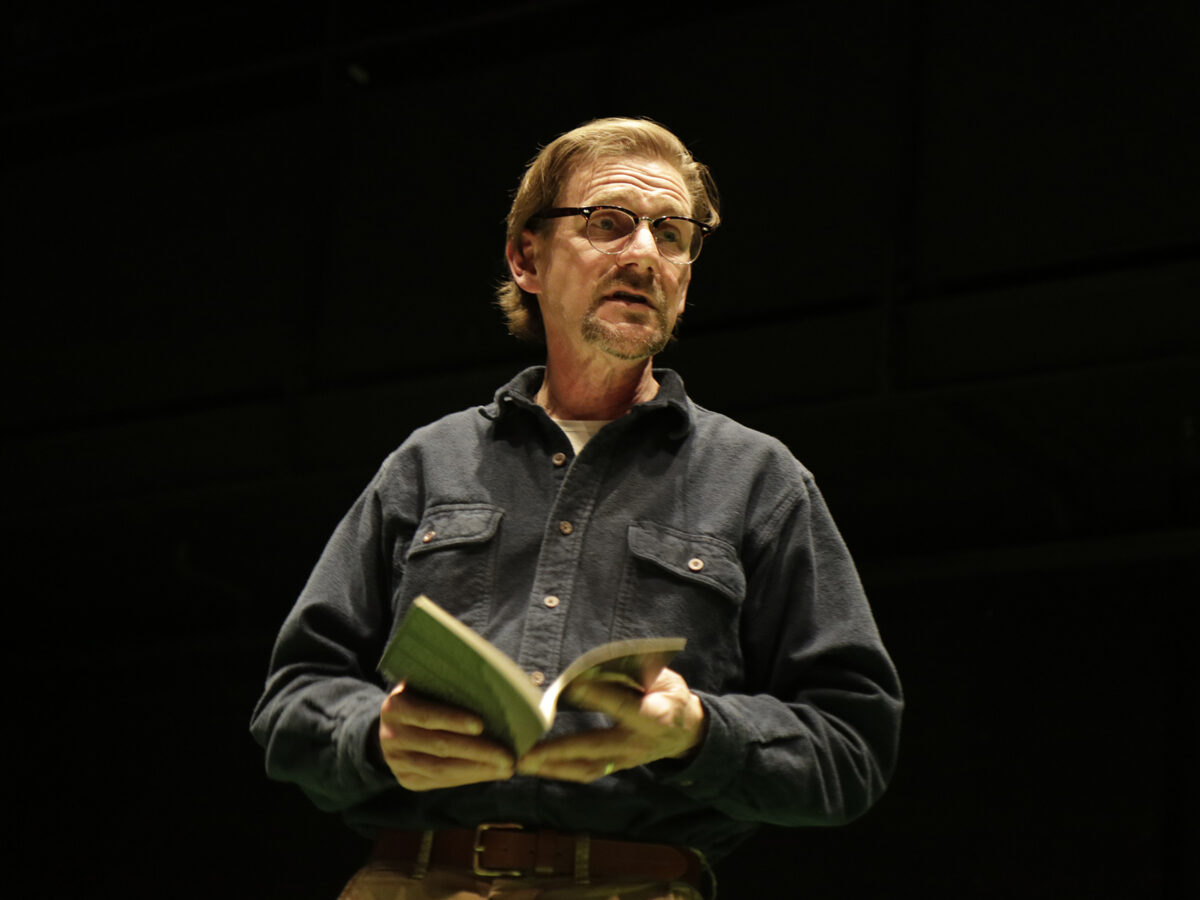
After an introduction by Beth Rohloff, associate director of the Class of 1945 Library, Todd Hearon kicked off the evening. “If it’s OK, I’m going to stand out here,” Hearon said, forgoing the lectern and speaking directly to the audience from mid-stage. “It’s an intimate gathering.”

He read several selections from

Click to follow link.”>Crows in Eden, a “hybrid work” of both prose and poetry published on March 24. Told in multiple voices, it takes place largely in southeast Tennessee, across the Blue Ridge Mountains from where Hearon was raised in North Carolina. Stripped by copper mining, the area became “a wasteland of eroded hills and mountains,” Hearon said; it has since been reforested, hiding this history beneath. Crows in Eden deals with this narrative, as well as the lynching of three Black men in the region in 1919 and the expulsion of the local African American community.

“In my imagination, those two narratives coalesced — the landscape as a kind of open wound that has not been healed…has been suppressed, has been denied,” Hearon said. “What you see when you go there is not at all a whole picture of what actually happened.”

Hearon, a poet, dramatist, songwriter and essayist who coordinates the Bennett Fellowship Program, also read from the first chapter of his debut novella,

Click to follow link.”>Do Geese See God, published in 2021. The story centers around a pair of twins, a brother and sister, who are separated after their parents die in a car accident. They reunite 14 years later, after enduring separate traumas, and resolve to return to Ithaca, New York (an Odyssey reference) to take revenge on their foster parents.

Erica Plouffe Lazure, a former Bennett Fellow, struck a more humorous — yet poignant — note with a reading from

Click to follow link.”>Proof of Me, a collection of linked stories published last month. Many of them revolve around a fictionalized town in North Carolina, where Lazure spent about eight years and started writing fiction. The book is “very much steeped in my experience there, but also in what I imagined to be there,” she explained. “If you read from the start to the end, you might see…little connectors, like little constellations, that move throughout each of the pieces.”

“[Those are] tough acts to follow,” Alex Myers said, before stepping behind the lectern to read from his latest novel, The Symmetry of Stars (2021). In the section he read, from the beginning of the novel, two godlike beings — Nature and Nurture — spar over control of the world and make a fateful bet, choosing two human sets of twins as their proxies. While narrating this immortal struggle, Myers even managed to slip in a (presumably ad-libbed) reference to the not-quite-right metaphors found in some prep English papers.

In addition to The Symmetry of Stars, Myers has published two other books in the past two years: the novel The Story of Silence (2020) and the nonfiction work

Click to follow link.”>Supporting Transgender Students: Understanding Gender Identity and Reshaping School Culture (2021).

A book signing and reception in the Goel Center lobby followed the reading, along with the news that the Poetry Society of New Hampshire had chosen

Click to follow link.”>Surface Fugue: Poems (2021) by English Instructor and B. Rodney Marriott Chair in the Humanities Ralph Sneeden, as its “Book of the Year.”

Matt Miller, another member of the English Department, was nominated for the same honor for his 2021 collection

Click to follow link.”>Tender the River. Sneeden and Miller had been scheduled to join their colleagues for the faculty reading, but were unable to attend after the Poetry Society’s award presentation was scheduled for the same time.

Taking the mystery out of accessibility

When Todd Hanson began to address Exeter students from the stage of Assembly Hall on Tuesday morning, the images projected on a screen of Hanson running marathons and hiking mountains were incongruous with the man sitting before them. Hanson is in a wheelchair, his speech the voiced text written on an iPad.

Hanson explained that the life of the man on the screen changed in 2008 when — in the middle of a 50-mile solo hike through the wilderness — he encountered symptoms of the motor neuron disease primary lateral sclerosis. Over time, the disease would take his ability to walk and even talk.

As the rapt Assembly Hall audience would learn, the affliction robbed Hanson of some passions but inspired a new one. An architect and principal at JSA Design in Portsmouth, New Hampshire, Hanson has teamed with colleagues Anne Weidman and William Tucker to found Access Navigators. Initially intended to map accessible restaurants in Portsmouth, the nonprofit has spread to 25 cities and towns across New England. Access Navigators has become a national leader in advocacy for people impacted by disabilities, seeking new ways to keep them connected to their communities.

People with disabilities constitute “the largest minority group in the world,” said Weidman, noting there are 30,000 in the county in which Exeter resides. “It’s the only minority group you can become a part of at any time.”

Hanson’s and Weidman’s visit to Exeter was part of the school’s Core Values Project, dedicated to studying and promoting diversity, equity and inclusion. Stephanie Bramlett, the Academy’s director of equity and inclusion, told the students that as soon as she learned about Access Navigators’ work, she sought them out to visit.

Access Navigators has developed a simple checklist to gauge accessibility in public spaces. Volunteers, with minimal training about the basic requirements established by the Americans with Disabilities Act, audit a venue’s public entrance, interior usability, restrooms and parking. The effort is not about catching non-compliant establishments in the act, it’s about providing information to those with disabilities and information to communities that want to become more accessible.

Today, Hanson is considered one of the pre-eminent architects and thought-leaders in healthcare design — a fact heavily influenced by his condition. “I didn’t understand what living with a disability meant” before the onset of his symptoms, Hanson said. “I was determined to not let my disability define me. But as I learned, we don’t always get to determine what defines us.”

Hanson closed his remarks with a statement he lives by every day: “You can’t be included unless you’re present. And you can’t be present unless you’re able to get there.”