Making history her story
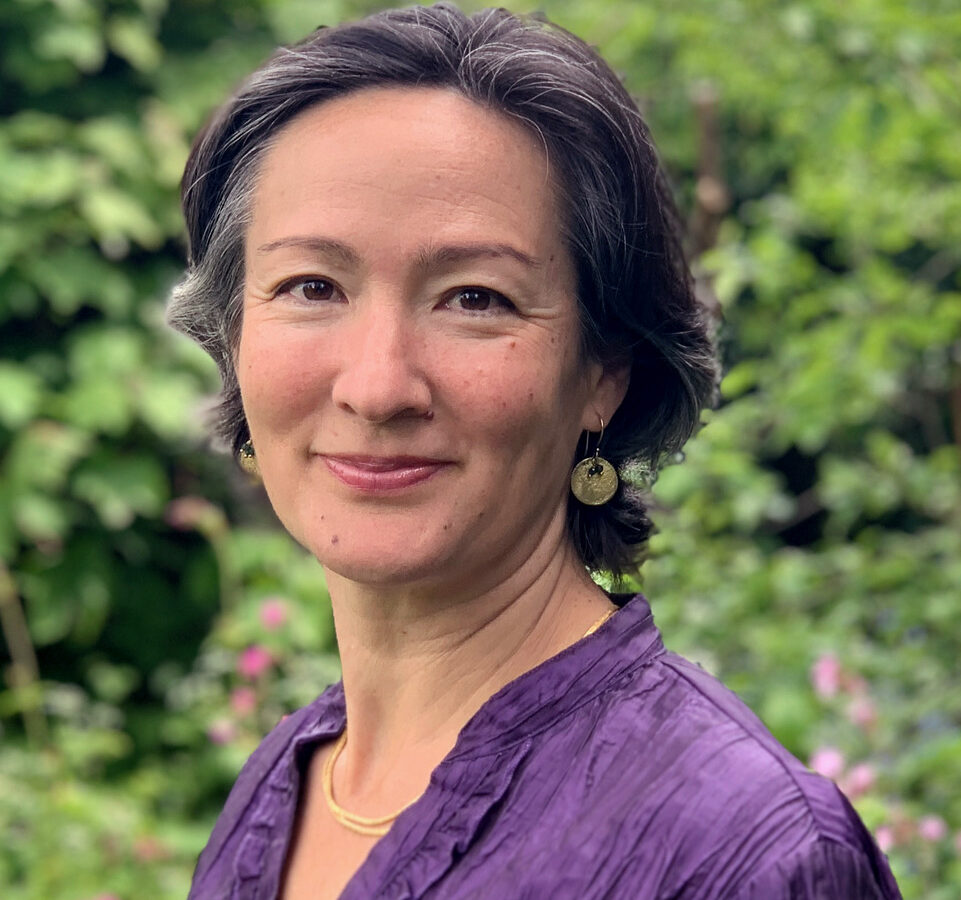
A conversation with memoirist Madelyn Postman '90
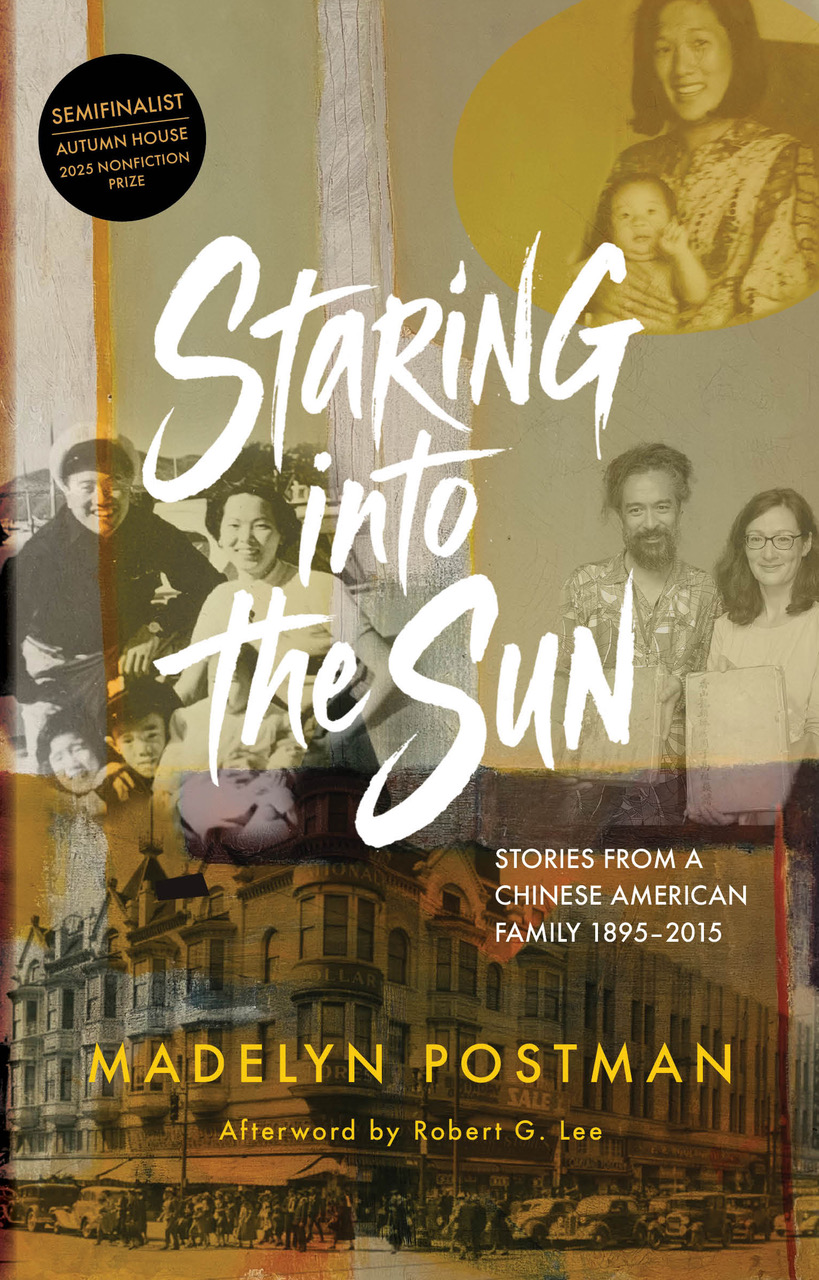
Decades ago, an aunt gifted Madelyn Postman ’90 a family tree detailing an ancestry she knew little about. Intrigued, she began digging into her family’s history, ultimately engaging a professional genealogist. That research evolved into a family memoir, Staring into the Sun: Stories from a Chinese American Family 18952015. Featuring her great-grandfather’s journey from a Chinese village to becoming a self-made millionaire in the U.S., her grandmother’s marriage to a renowned magician, and an intimate glimpse of her mother’s struggle with mental illness, the work deftly captures 20th-century American social and economic structures, immigration, and the building of new communities in California’s Bay Area.
Postman, a sustainability consultant, drew on interviews with family members, visits to China and newspaper archives to write this engrossing mélange of memoir and creative nonfiction that is both a sharp-eyed take on her family’s dynamics as well as a deeply moving tribute to her relatives.
We caught up with Postman in the run-up to the May publication of Staring into the Sun.
 You covered some big themes in the book — immigration, identity, social and economic structures. Did those topics come through organically as you were telling your family story?
I think you can’t really extricate people from their surroundings and their context. I’m always struck by the world we’re born into, our cultural and our socioeconomic and geographic contexts. Part of the reason for writing this was to learn about history as well: I think if you see history through the eyes of an individual who lived through it, it gives you a much better grasp on what happened at that time. I also really like to show how quotidian life — culture, food, language, the way people dress — reflects bigger themes and ideas.
Part of your family story is a melding, through marriage, of two prominent Chinese American families. When did you realize that your family history was enmeshed in the history of California’s Bay Area?
I grew up knowing about my great-grandfather [entrepreneur and philanthropist] Joe Shoong and his [dry-goods store chain] National Dollar Stores. That was always part of my knowledge of the family background. It’s been interesting hearing from the other side of my family, my grandmother’s side, who married into that dynasty — I mean, they were well off, but nothing like the scale of the Shoongs. That’s what Henri’s chapter is all about.
I found the sections about your great- grandfather Henri and your great-grandmother Rose particularly compelling. How did you bring family members to such vivid life, some of whom you never met?
My cousin Michael remembers Henri really well, so he captured Henri’s personality for me. Rose died in the ’50s, but my great-aunt Celia, who just turned 100, told me about Rose, how feisty she was. I used Celia’s interview as well as photos of Rose. In those, she looks very unhappy and sort of stiff. That was probably the chapter I had the most fun with because Rose is a really unlikable character. I leaned into that and had fun with it, showing her conflicts.
Were there particular challenges that arose as you were researching the book?
It’s challenging writing about the people who are alive, not wanting to offend them. But you also don’t want to write about them in a flat way, only putting them in a good light. I’ve hurt some people by being too honest, but it didn’t create any lasting rifts. People have actually been very open with information — I don’t think there have been family secrets that people are trying to hide — but a couple of people wanted to be anonymous.
Why did you decide to only tell the stories of your Chinese American relatives in this collection?
Finding the voice for this project was tricky. At first, I wrote myself in the third person; after a manuscript assessment, I changed the chapters that I was in into memoir pieces — they became more emotionally powerful. With the narrative nonfiction chapters, I used Save the Cat! Writes a Novel and Story Genius, really helpful books in terms of plotting and structure. Bouncing between memoir and creative nonfiction, I got to the Staring into the Sun chapters, and realized, “This will stand on its own, as one story about half of my family.” For the other half, I’m working on a novel.
You published chapters of this book on The Spark, your podcast and Substack newsletter, where you also share interviews with other writers. How much has input from fellow writers motivated and shaped your work?
In all spheres of life, I really believe in community, and I’ve become quite active in the writing community. I was pretty isolated and working on my own until around 2022, and then I started to do some courses on writing a synopsis, writing about conflict and tension, all these different kinds of online courses. On one of the courses, somebody in the chat said, “There’s a podcast called The Shit No One Tells You About Writing,” and that’s been an amazing resource. I listened to every episode. They give so many tips on the publishing world and writing, and they do author interviews, which is a great way to learn about writing craft. You can get so much from a community of writers, and you give back to that as well, being a good literary citizen.
How has your background in branding and communications influenced your approach to writing?
They’re very different things in terms of writing — different zones, different headspaces. For narrative writing, I really have to have focused time, to get into a flow; I need bigger chunks of time, and it feels like I’m using completely different parts of my brain. It is more time intensive and energy intensive.
Did you learn anything new about yourself writing this book?
It was quite cathartic and therapeutic to write about the family, and about my mother’s death in particular. And I think my view of myself changed: I wouldn’t have called myself a writer going into this, and I definitely am a writer coming out of it.
Finally, what do you carry with you from your time at Exeter?
Prep year I got an English award for a story about my brother … and there was another story that was about him and my grandparents. This is exactly the stuff I’m still interested in, and it goes back to Exeter! Having that encouragement to write made a difference: I had Peter Greer and Rex McGuinn, both just incredible teachers. I think learning how to write is indispensable in all areas of life.
And something else from Exeter which is really important is the Harkness system, learning to speak up and be in a conversation where you’re building on people’s points, learning that sometimes you need to interrupt them. I’m really aware of how a lot of women don’t speak and don’t interrupt, when sometimes people have to be interrupted because otherwise you can’t get a word in edgewise. That is also something I use every day.