A community of support
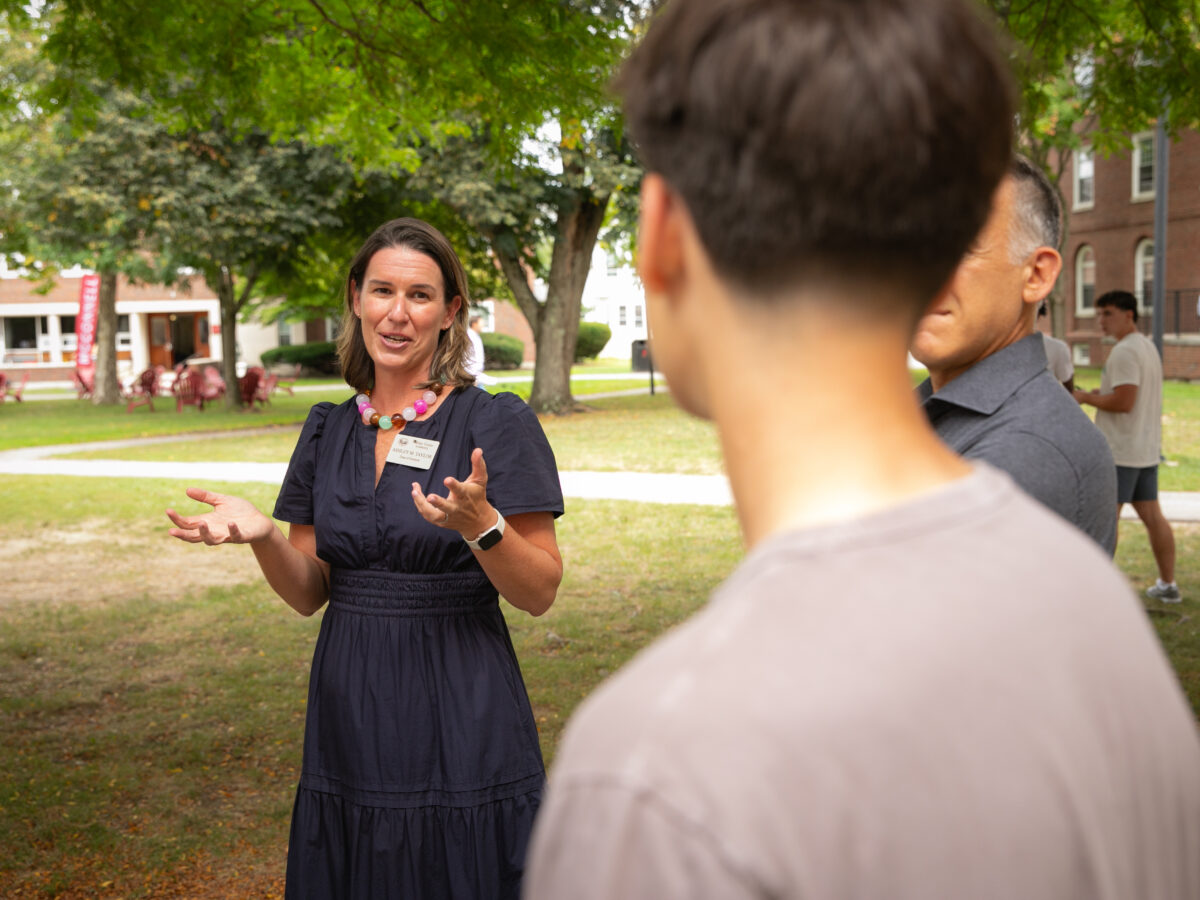
Dean of Students Ashley Taylor is the hub of a network of caring adults, all committed to helping Exeter students thrive.
When Ashley Taylor arrived at Exeter in 2024, she noticed immediately how the Harkness philosophy permeated every aspect of life on campus. “Just visiting classes, I was struck by the way that students so naturally agree and disagree in a very respectful, intellectual, curious way,” she says. “The idea that you converse across differences, and you should expect to have your viewpoints questioned or challenged and for your understanding of yourself and others to evolve and grow. Harkness is really in the fabric of this place.”
A native of Washington, D.C., Taylor earned her undergraduate degree at Brown University and her Master of Liberal Arts with extension studies in biology from Harvard University. Before coming to Exeter, she spent 14 years working at Episcopal High School in Alexandria, Virginia, where she taught science, coached lacrosse and served as dean of students for nine years.
Taylor sees being an advocate for Exeter’s students, and helping them thrive in every aspect of their lives on campus, as the most essential part of her role in the dean’s office. “The longer that I’m here, the more students are comfortable reaching out to share with me their hopes and dreams, the things they love and the things they wish were different,” she says. “That’s really important to me.”
In addition, Taylor serves as the nexus of a robust support system for the adults on campus who are tasked with caring for those students, including dorm faculty, advisers, teachers, coaches and beyond. This network includes dedicated deans in charge of residential and community life, academic affairs, multicultural affairs, student health and wellness, and student well-being.
“I like thinking of systems and structures that support student thriving, and helping to create spaces where the right people are around the table to have the right conversations,” Taylor says. “An important part of my role is helping to think about how Exeter can stay true to who we are and have always been, while also thinking about how we are going to evolve to meet the needs of today’s students.”
Importance of trusted adults
Taylor admires how advisers, teachers and other adults at Exeter support students while at the same time giving them space to find their own way through challenges. “I think being allowed to struggle a little and then get their feet under them and realize they can do it gives students so much confidence,” she says. Having her own group of advisees in Webster Hall helps Taylor stay connected with students. “It’s been amazing to watch how my advisees have all grown in different ways. They’re all very different but have found their way here.”
Mindful limits on technology use
Rather than adopt restrictive rules, Taylor and her team have focused on empowering students to be more intentional about technology use, including cell phones, social media and artificial intelligence. Their evolving approach has included designating phone-free spaces in all classes, labs and assemblies, and limiting phone use for ninth and 10th graders in the evenings. “[Our policy] is not meant to be punitive or combative,” Taylor says. “It’s just meant to help provide some structure for the students who really want to thrive.”
Balancing work and joy
Taylor is particularly excited about the conversations going on at Exeter around health and wellness, and how adults on campus can help students achieve and find success while also caring for their mental health. “What I love about Exeter is that you can talk with a whole host of students on a Monday about how they spent their weekend and you’ll get a different answer from every student,” Taylor says. “The biggest thing we’ve been talking about is helping students understand that rest and joy and play are actually the foundation for some of the big goals that they have — it’s not in opposition to them.”