Exeter celebrates Veterans Day
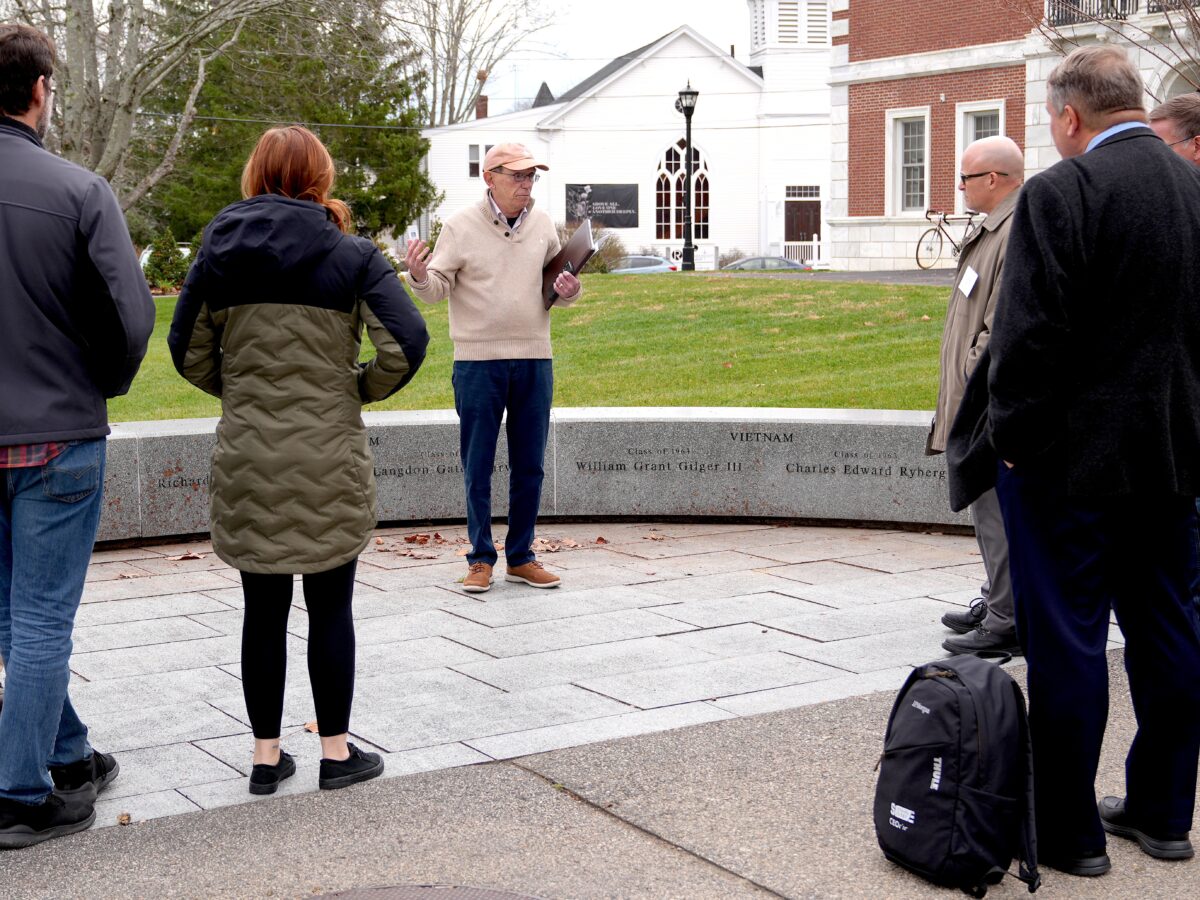
On a day to salute Exonians who served, a tour of memorials honors those who gave the ultimate non sibi sacrifice.
Every day, thousands of students walk around campus — past seven war memorials with histories often overlooked. Even the prizes awarded each year to exemplary graduating students honor names that are often skimmed over. However, the stories of legendary Exonian veterans must be honored and celebrated.
As Emeritus Instructor of History Jack Herney ’46; ’69, ’71, ‘72, ’74, ’92, ’95 (Hon.), who has many Exonian veteran stories committed to memory and has led Memorial Day assemblies for almost two decades, explained, “heroism is something to celebrate.” He continued, “It’s something to espouse and champion and say that these [veterans] are among our best. They have given the ultimate non sibi sacrifice.”
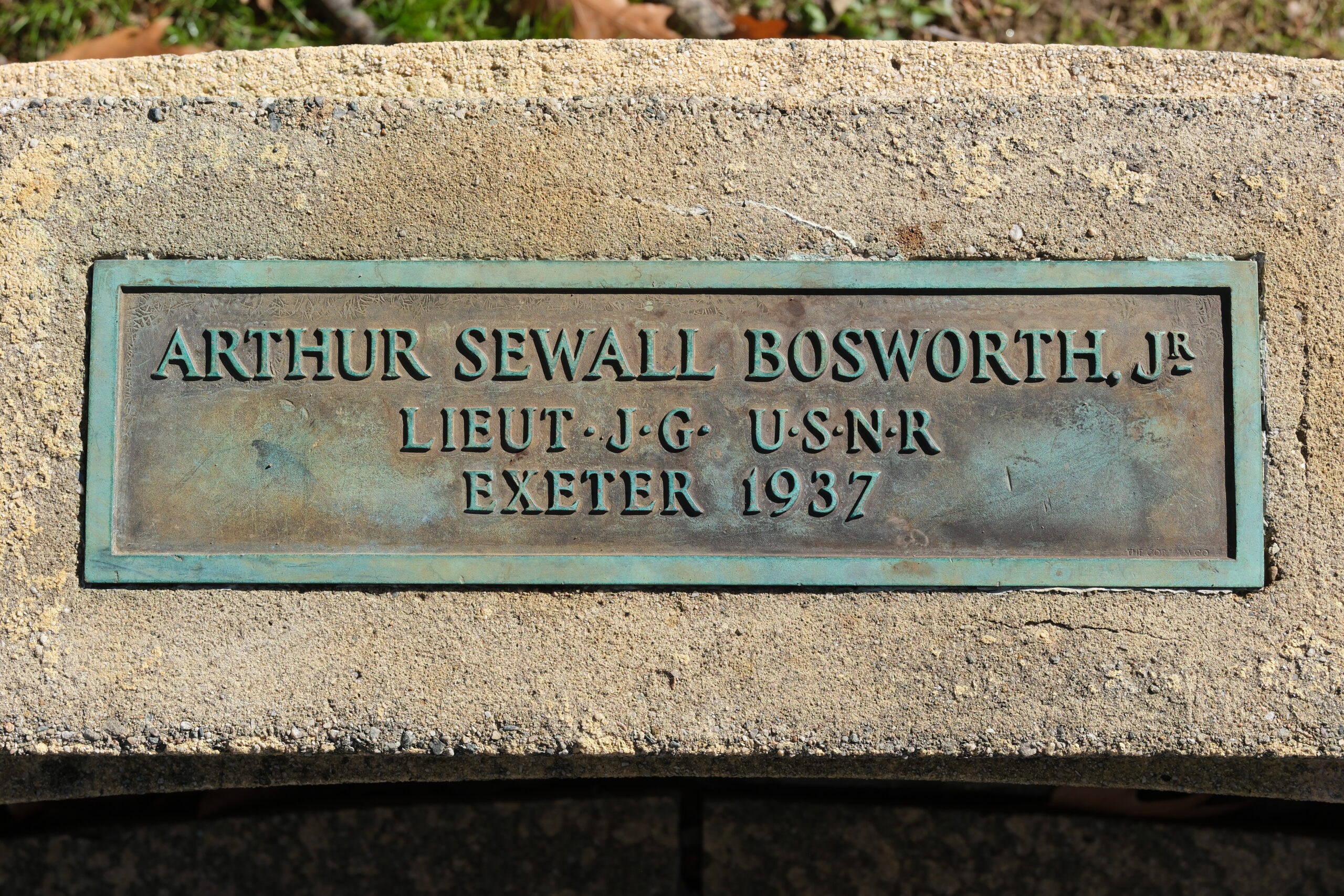 Behind Peabody Hall is a bench dedicated to Lt. J.G. USNR Arthur Sewall Bosworth, Jr. ’37, who fought during WWII. Bosworth’s plane crashed in the South Pacific on April 22, 1944. He managed to escape and rescue his co-pilot, but lost consciousness and later died. One year later, his parents erected a memorial on campus to honor him and surrounded it with lilacs, Bosworth’s favorite flower from home.
Plaques hung throughout the Academy Building honor those lost in the First and Second World Wars. On June 11, 1921, the World War I Memorial was unveiled, listing all 62 Exonians who were killed in the war. F.J. Price 01 was the first Exonian to die in WWI at Ypres, Belgium. Ensign Stephen Potter ’15, whose large portrait hangs in the Academy Building, was the first American naval aviator to shoot down an enemy aircraft. In 1942, President Franklin D. Roosevelt commissioned the USS Stephen Potter, a destroyer named in his honor.
The World War II Memorial was dedicated on October 7, 1950, to the 146 alumni who gave their lives. On May 22, 1954, the Class of 1944 dedicated a plaque, which is hung in the Academy Building’s front entryway, to their classmates lost in WWII.
On May 22, 2014, the Class of 1944 dedicated the Civil War Memorial. Frank Dorman ’44 researched and self-published a book on the 318 Exonians who served and 38 who died during the Civil War, titled Phillips Exeter Academy and the Civil War: A Roster of Alumni Who Served in the War and Biographical Sketches of Those Who Died. Exonians fought on both sides of the war and in almost every battle. When Major Gen. George Pickett led Pickett’s Charge on the final day of the Battle of Gettysburg, an Exonian stood beside him. Opposing them on Cemetery Ridge stood three Exonians. “Exonians were all over the battlefield; it’s just extraordinary,” reflected Herney.
In the hallway of the Lamont Art Gallery is a memorial for Thomas W. Lamont II ’42. The annual Thomas W. Lamont II Prize in English Composition for the best extemporaneous essay in Senior English is named in honor of him too. After graduating from Exeter and attending Harvard for less than a year, Lamont enlisted in the Navy. He wanted to fight. He was aboard the USS Snook on April 9, 1945, when the submarine went missing with 84 crew members aboard, including two Exonians — Lamont and the captain of the submarine, John Walling ’30.
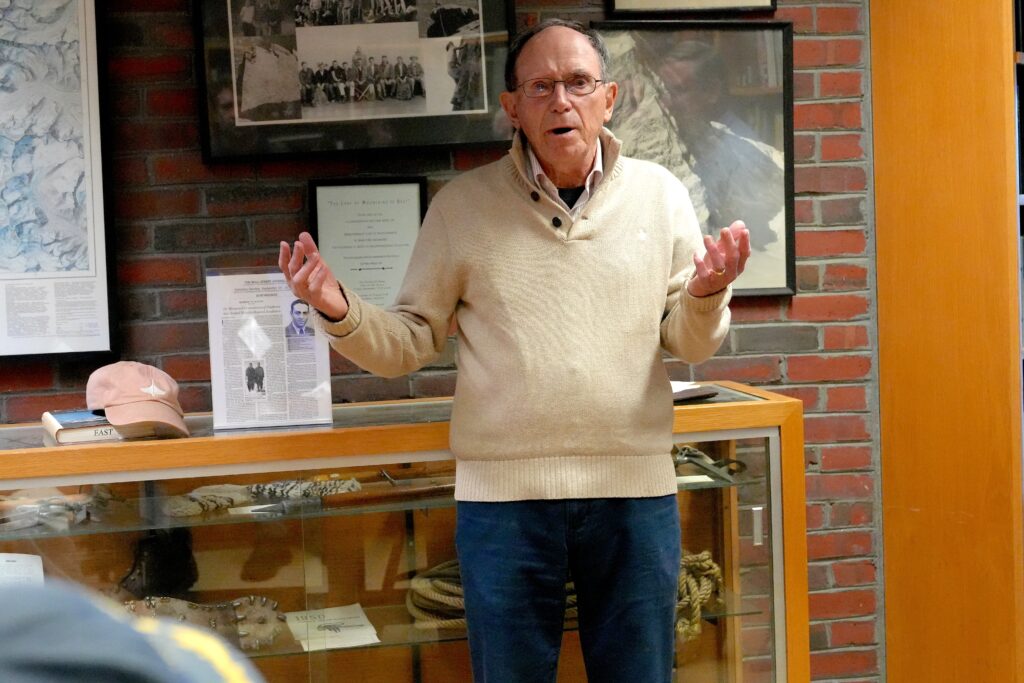
Jack Herney, instructor emeritus in the Academy Department of History, spoke during the 2026 Veterans Day observances about the Exonians who died in military service.
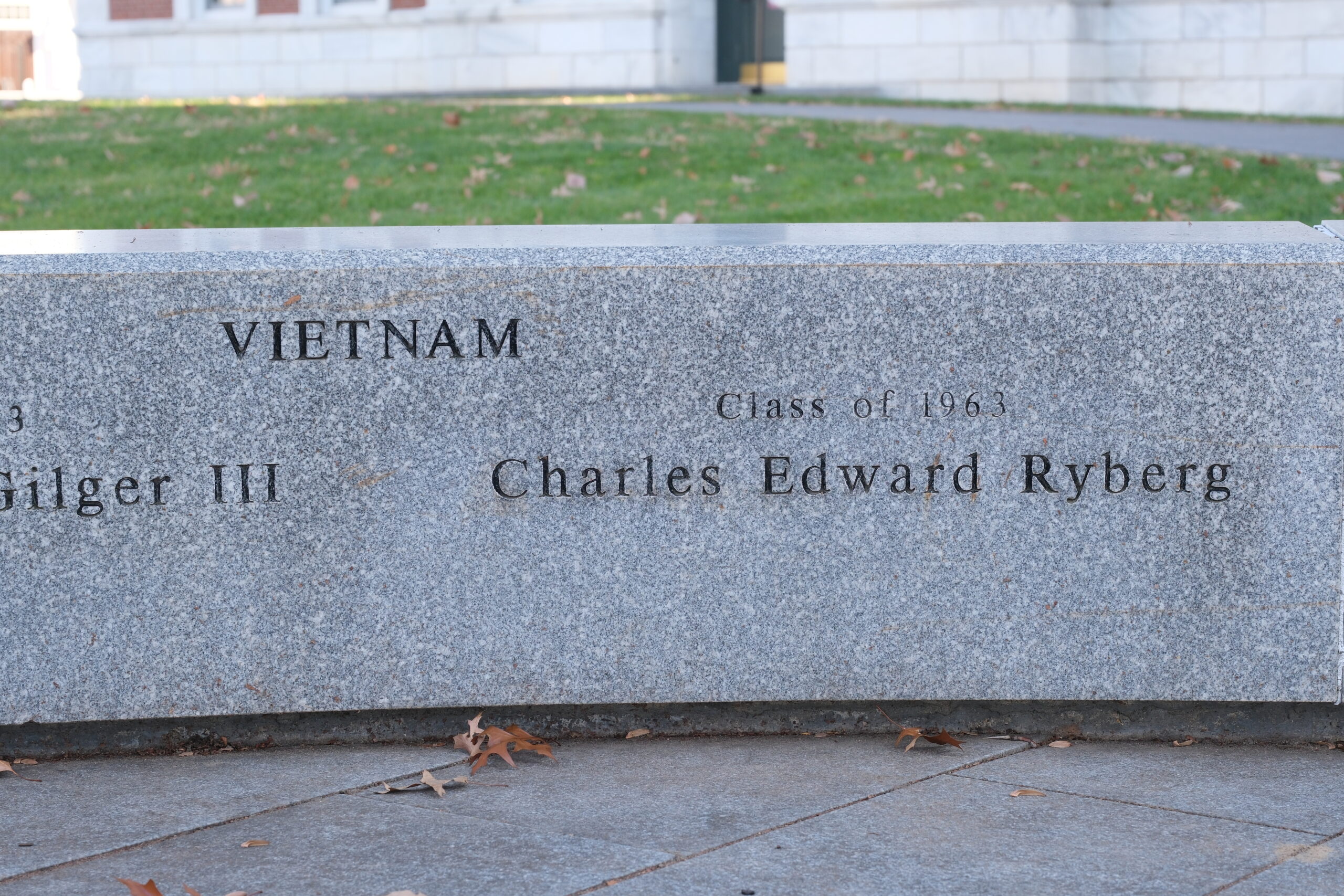
On Veterans Day in 1995, the Korean-Vietnam Memorial was dedicated. Found outside of Davis Hall and the Class of 1945 Library, the memorial has 15 names inscribed upon it, listing alumni from the classes of 1935 to 1964. The names include Charles Ryberg ’63, whom the Charles E. Ryberg Teaching Fund for a young faculty member in the humanities honors.
Every year during the Prize Assembly, the best student in American History is awarded The Blackmar Prize in honor of General Wilmont W. Blackmar ’64. Blackmar, who had come to the Academy in 1861, left immediately when the Civil War broke out the next year. He was 21 years old at the time and eventually would rise to the rank of major. He won the Medal of Honor for the Battle of Five Forks, a decisive battle at the end of the war in the Appomattox campaign, and was present at Appomattox Courthouse when Confederate Gen. Robert E. Lee surrendered to the Union and Gen Ulysses S. Grant, bringing the Civil War to an end. Blackmar’s commander took the chair Grant sat in on that historical day and eventually gave it to Blackmar, who would give the chair to the Smithsonian. Blackmar became commander of the Grand Army of the Republic and was the second person to ever lie in state at the Massachusetts State House.
The Lt. John A. Larkin Jr. Memorial Prize in Art is awarded every year to students with outstanding work in drawing and ceramics. Larkin fought in WWII and had been interested in art. Similar to Larkin, Lewis Sibley, whom The Lewis Sibley Poetry Prize is in honor of, lost his life in WWII and was passionate about the art of poetry. Sibley had received a Silver Star and had been in the Battle of the Bulge. He was killed in Germany at the site of the school his father had been taught in, and after his death, the Academy’s English Department published a book of his poetry.
In a letter from Germany to his Exeter roommate David Wheeler, Sibley reflected on his choice to fight in the war. He quoted a poem that he and Wheeler had memorized by Thomas Babington Macaulay:
“And how can man die better / Than facing fearful odds / For the ashes of his father / And the temples of his gods?” Then he responded with his own quatrain: “He could die ‘mid friends and family / With thoughts upturned to Heaven / On a soft inner-spring mattress / At the age of eighty-seven.”
The annual Negley Prizes for the best essays in American History are in honor of two brothers from the Class of 1931 and 1933. When WWII broke out, the Negley brother from the Class of 1931 was living in Manila and immediately joined the Army. He was with Gen Douglas MacArthur in the Southwest Pacific and was captured when the Japanese invaded. He survived the Bataan Death March, but was tragically killed by American bombs when he was a prisoner on a Japanese ship.
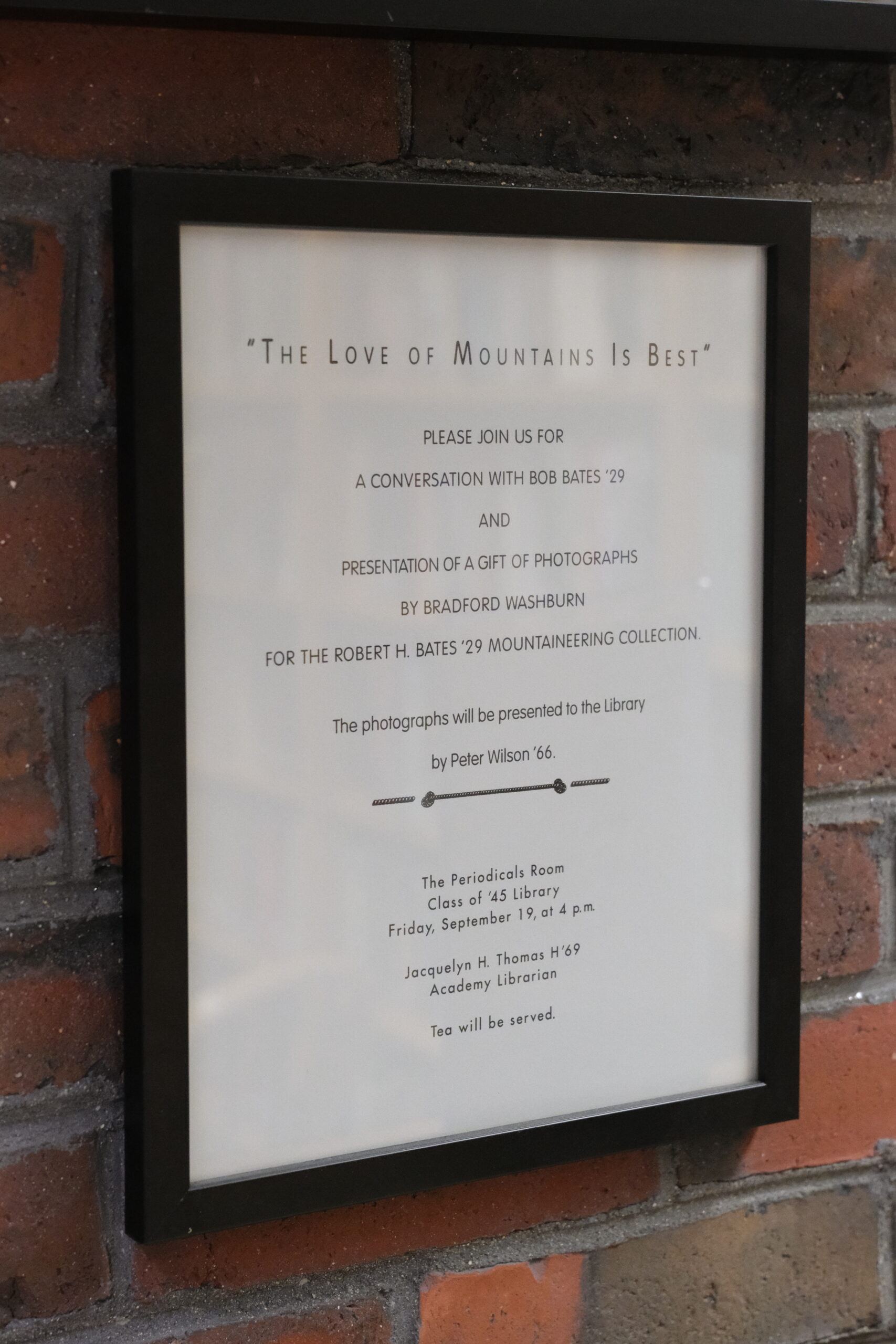
The John Parker Compton Scholarships are awarded to seniors every year and provide financial support for college. The scholarships are in honor of John Parker Compton ’43, who was a member of the 10th Mountain Division, an elite light infantry division specializing in alpine and winter warfare. The division wore cold-weather gear tested by legendary mountaineer Bob Bates, an Instructor of English at the Academy and whom the Bates Room in the Class of 1945 Library is dedicated to. Compton was killed by the Nazis while attempting to save a family trapped in a church behind enemy lines in Iola, Italy.
In the celebration of these stories of bravery and selflessness, there is also an inevitable pang of sadness and loss. However, these stories of youth giving up their lives show that there is “something worth serving that’s greater than yourself,” emphasized Herney while reflecting upon the stories he has committed to heart. “[The veterans] gave ultimate gestures of service, giving up their lives, but just the small gestures anyone can give every day are important too. Remind yourself of that and remember that there is no end to the service you can give to other people.”