Roots of
Roots of
Discovery
Toby Kiers ’94 reveals the hidden fungal networks shaping ecosystems beneath our feet – and perhaps a powerful ally in the fight against climate change
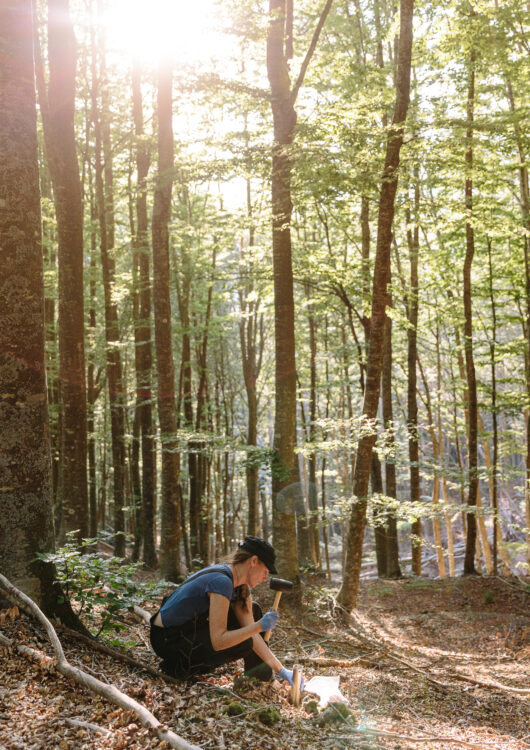
Evolutionary biologist Toby Kiers ’94 arrived at the forested base of Africa’s Mount Kenya in 2011 to collect soil samples — with her husband and two children, ages 1 and 3 at the time, beside her. “I wanted to have this career in science and be out in the field,” Kiers says. “I also had young children and a very supportive husband. I was determined to be with them.”
Like trailblazer Jane Goodall — who raised her only son in the 1960s and ’70s while studying chimpanzees in the jungles of Gombe Stream National Park in Tanzania — Kiers chose to bring her full self into the wild as a scientist, a mother and a wife. She believes that taking her family on research trips has positively shaped the way she engages with the landscape.
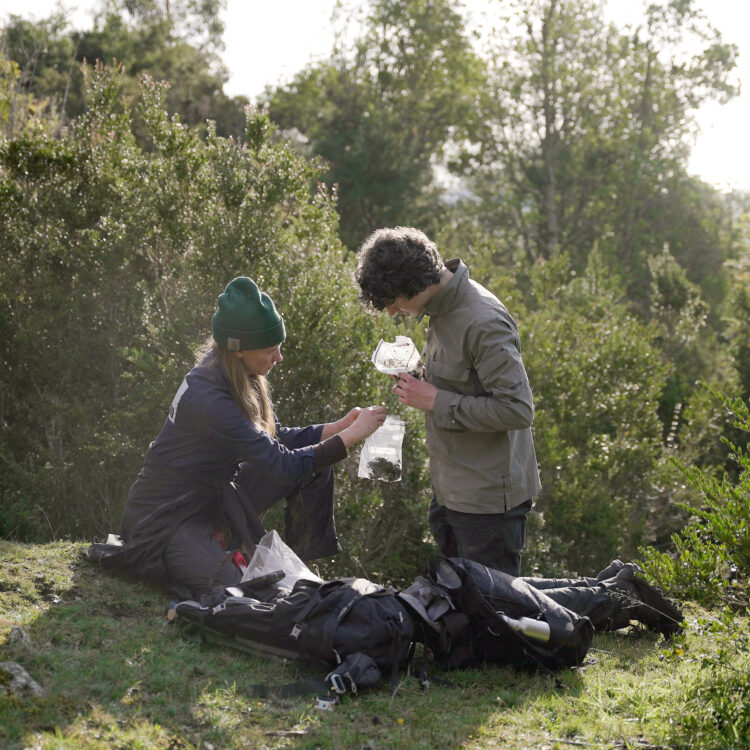
“Sometimes my kids would taste the soil, and so I started tasting it too, to gauge things like the pH level and acidity,” Kiers says. “It’s not something that you can broadly recommend because local soils are very different. One time, in Chile, I tasted the soil and it was so spicy that I immediately thought I’d done something wrong. But as a scientist, you have to be open to that, to following childlike curiosity to success — or to failure — and learning from it.”
What Kiers didn’t know was just how far these leaps of faith would take her. Over the past decade she has traveled across deserts and into cloud forests. In 2025, she was named one of 22 MacArthur Fellows who received $800,000 no-strings-attached awards, popularly known as “genius grants.” They are given annually to creative and innovative individuals across a wide range of fields. The fellowship is a testament to the years Kiers has spent in the field and the lab, tracking the invisible lives of a vast, misunderstood community: fungi.
To many, fungi might register as a culinary delicacy or an infectious agent. A bowl of sauteed mushrooms, perhaps, or the ravenous organism that transforms people into berserker zombies in The Last of Us. But Kiers’ groundbreaking research into the true extent of fungal activity has brought to light how fungi silently sustain our world.

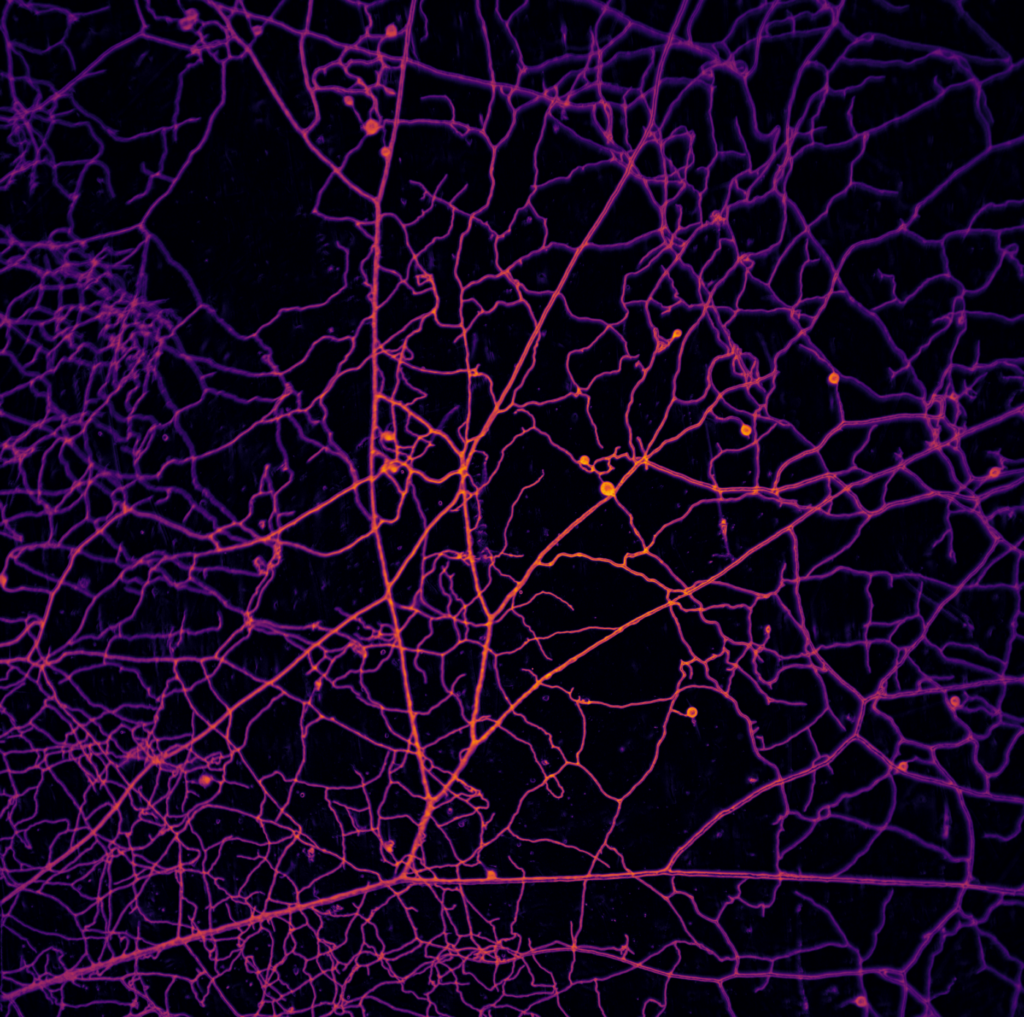
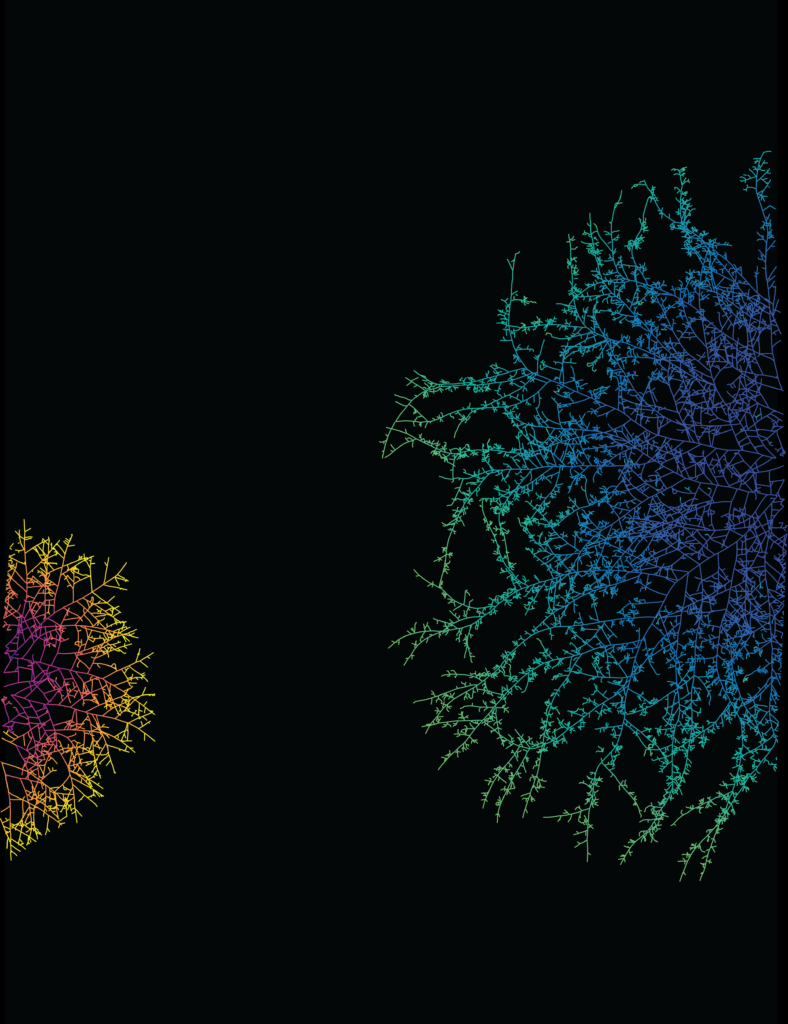
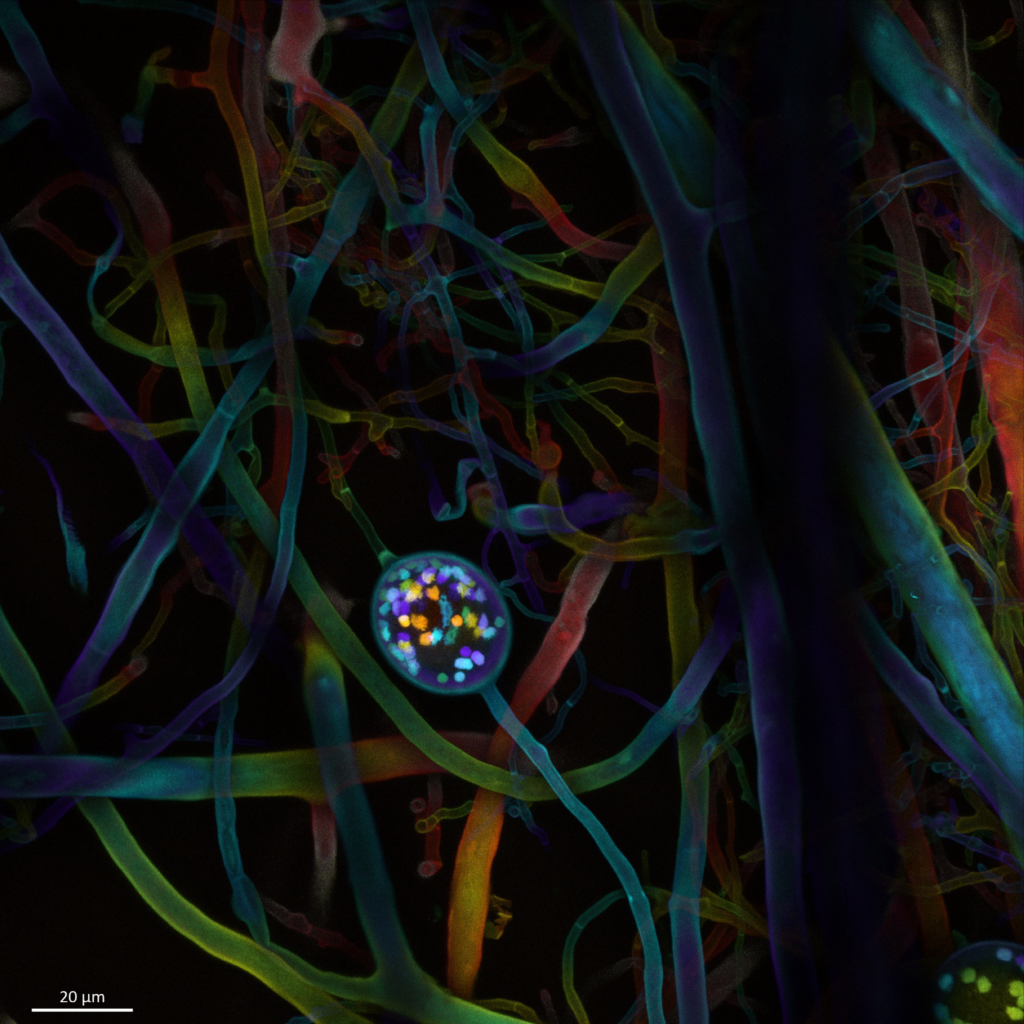
Kiers studies samples imaged with confocal microscopy and fluorescent dye (pictured) to better understand the fungi’s mycelial network systems. Bright circles represent reproductive spores that store plant-derived carbon underground.