Bill Endicott ’64: Fighting the Good Fight
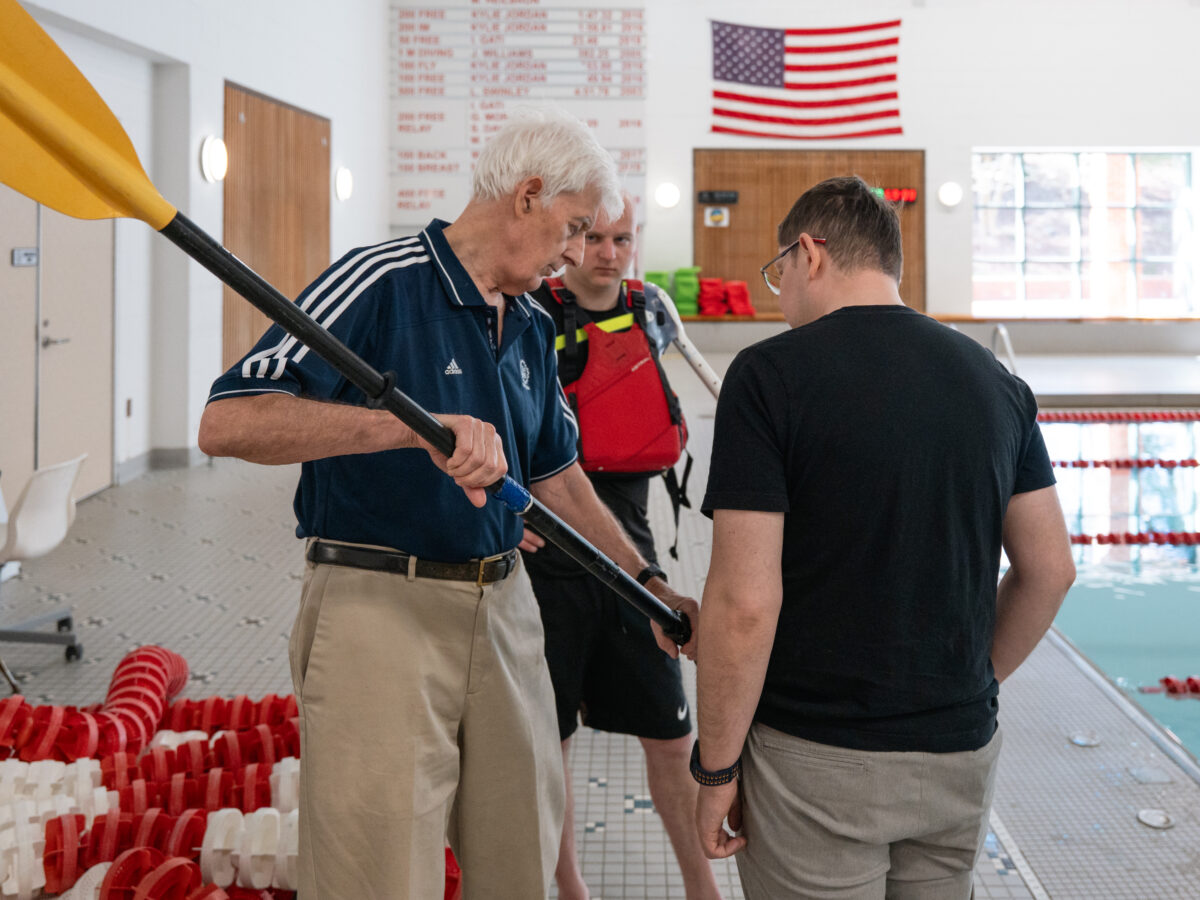
Bill Endicott ’64 supports recovery of Ukrainian soldier amputees
On April 19, 2022, eight weeks after Russia initiated a full-scale invasion of Ukraine, Bill Endicott ’64 sent an email to his friend, the owner of a prosthetics company, with a simple but vital request: Would you be willing to help Ukrainian soldiers? Forty-five minutes later, he had the green light to start an initiative that would provide prosthetics, rehabilitation and support to Ukrainian soldier amputees. He named it Operation Renew Prosthetics (ORP).
At that early stage of the war, Endicott could not have foreseen how desperately Ukrainians would need the help. Reports estimate that there are 115,000 Ukrainian amputees because of the war. With limited access to advanced prosthetics and inpatient rehabilitation, many wounded soldiers endured recovery alone.
Endicott reached out to the Future for Ukraine Foundation, a Ukrainian-run charitable group based in Poland, and expressed ORP’s desire to treat amputees at Medical Center Orthotics & Prosthetics in Maryland. That company, owned by his friend Michael Corcoran, had expertise in caring for blast injuries. Future for Ukraine became ORP’s partner and primary connection to soldiers, who are affectionately called defenders by their compatriots.
The first Ukrainian soldier, Oleksandr “Sasha” Chaika, arrived in the U.S. for treatment in the fall of 2022. In April, a month after he joined the fight, a Russian tank shell exploded near the trench he was in in Popasna. Chaika was hit by shrapnel and lost a leg; doctors gave him a 20% chance of survival. Future for Ukraine covered all his travel expenses and ORP provided a free prosthesis and six weeks of rehabilitation.
Before the war, he was a dancer and choreographer. Today, Chaika is married with a young son and has realized his dream of opening a dance school in Ukraine. “Sasha recovered about as well as you can with a major amputation,” Endicott says. “He told me that one reason he was so motivated to recover was to prove the doctors were right to take a chance on saving him.”
Five more soldiers arrived in the U.S. after Chaika. But with the cost of a single prosthesis ranging from $8,000 to $50,000 or more, the operation was unsustainable. Instead, the organizers decided to establish a clinic in Kyiv, Ukraine’s capital, and train Ukrainians to run it independently.
Endicott has always been driven by a strong moral obligation to help others. He was born in Boston in 1945, in the shadow of World War II, into a family that traces its origins in America to 1628, when John

Endecott (the family changed the spelling to Endicott in the 18th century) landed in Salem and became the first governor of Massachusetts. “My family’s been involved in public service for 400 years,” he says, “so I’ve always felt that a good life is one in which you do some things for yourself, but you do some other things for other people. It’s a balance.”
Growing up in the Cold War era, Russia was a constant presence in Endicott’s life. In elementary school, he dived under his desk during air raid drills. As a student at Exeter in the early 1960s, he studied Russian history. He internalized the turmoil churning across America during the Vietnam War, watching his friends die while he was temporarily deemed ineligible to serve. In 1967, the principal at the time, Ernie Gillespie, gave a speech to the graduating class that became a rallying cry for Endicott, even to this day.
“The part I’ve always remembered goes like this,” Endicott says. “‘I hope, and I expect, that when you find yourselves involved in skirmishes on the frontiers of barbarism … you’ll strike some shrewd blows in favor of civilization. Someday you’ll come back to show us your trophies and your scars, and we’ll be glad to see you.’”
Determined to lead the non sibi life, Endicott embarked on a remarkable career of public service. He studied Russian language at Harvard College and received an M.P.A. from the Harvard Kennedy School. He worked for three U.S. congressmen and the Democratic National Committee, then served as director of research and analysis in the White House Office of Political Affairs during the Clinton administration. He enlisted in the Marine Corps Reserve, rising to the rank of captain, and worked at the Pentagon.
Endicott devoted the little free time he had to his passion: whitewater canoeing and kayaking. Following a collegiate rowing career at Harvard, he became a leading figure in the world of whitewater slalom, as an athlete, author and U.S. Olympic team coach. This is how Endicott and Corcoran first joined forces. In 1988, Corcoran traveled from Dublin to the U.S. to train with Endicott in the hopes of making the Irish Olympic team. Corcoran later relocated to America and co-founded MCOP in 2002. He and Endicott remained close.
In 2022, unified in their belief that Ukraine needed and deserved their help, they founded ORP. Three and a half years later, ORP has successfully cared for 112 soldiers and laid the groundwork for Ukraine to become a world leader in amputee care. They even shared their love of whitewater sports with the Ukrainian soldiers, hoping to establish a kayaking rehabilitation program in Kyiv like the one that exists for soldier amputees in the U.S.
On November 6, 2025, following a sleepless night of air raid alerts, Endicott was in Kyiv for the grand opening of a new clinic, Medical Center Orthotics & Prosthetics Ukraine. It is staffed entirely by Ukrainians, with 19 full-time and six part-time employees, and plans to hire more. They have been trained to operate independently to continue providing prosthetics to their country’s soldiers. Endicott hopes the clinic may someday help civilians as well.
The work of Operation Renew Prosthetics is now complete, but Endicott stands ready to help wherever he can, including possibly raising funds to assist former U.S. soldiers who lost limbs fighting for Ukraine.
“The Ukrainian people are astonishingly resolute and united in the face of all this adversity,” Endicott says. “When I start to worry about my own problems, I think about what Ukraine is facing, and particularly what these soldier amputees are facing. My problems are nothing compared to theirs.”
Endicott, an 80-year-old retiree, says he will always feel compelled to do what he can when duty calls.
“I’d like to think that Ernie would feel that these were ‘shrewd blows,’” he says. “And he was right: There have been some trophies and some scars!”
This article was originally published in the winter 2026 issue of The Exeter Bulletin.