‘Nobody deserves to be forgotten’
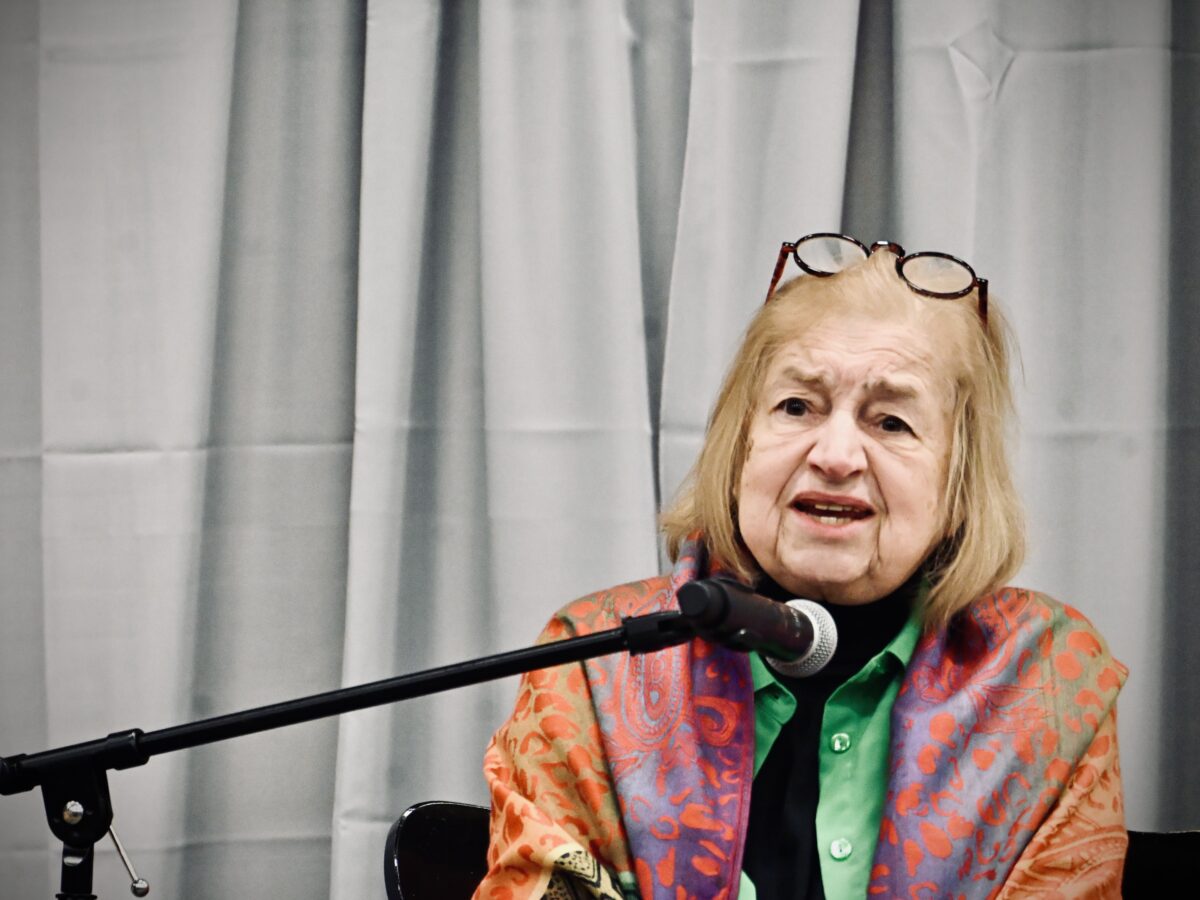
Holocaust survivor urges Exeter to prevent the seeds of hatred from taking root.
Addressing a hushed assembly for Holocaust Remembrance Day, survivor Kati Preston delivered a message that was as much a warning for the future as it was a reflection on the past.
Her testimony, spanning from the “stranglehold” of 1940s Hungary to a 50-year journey toward forgiveness, served as a stark reminder that history’s darkest chapters do not begin with state-sponsored violence, but with the silence of ordinary people.
The erosion of humanity
Born in Hungary in 1939 to a Jewish father and a Christian mother, Preston was only a child when the world was swept up in war and her happy life turned to tumult.
“I started to see my parents faces change,” she said. “They stopped laughing. They saw that things weren’t the same as before. Somehow, I felt it. Even though I was only a child, I was not even 5 at that time.”
Preston recalled how the atmosphere in her home shifted as laws began to strip Jewish citizens of their livelihoods and dignity.
“The Holocaust didn’t start with concentration camps,” Preston told the students. “It started at the grassroots level. It started with bullying, with pushing people, and laws came. All kinds of laws.”
She detailed the incremental “stranglehold” placed on her community: Jewish doctors barred from treating Christian patients, teachers dismissed, and municipal workers fired. At every step, Preston noted, people comforted themselves with the refrain, “It can’t get much worse than this.” Preston recounted the day her mother sewed a yellow star of shiny satin onto her coat. To a 5-year-old, it was a beautiful ornament. But while walking to get pastries, a stranger stopped her. Expecting a compliment, she instead met “total hatred” when the man spat in her face. “I said to my mother, ‘He hates stars,’” Preston remembered.
“I didn’t even imagine it was me he hated.”
Survival and the cost of silence
As the authorities began the final roundups in 1944, Preston’s life was saved by the grace of a young Christian woman for whom her mother had once made a wedding dress. While Preston spent months hiding in a barn, the world outside was being “obliterated.”
The statistics Preston shared were staggering: 28 of her family members, including her father, died at Auschwitz. Of the 30,000 Jews in her town, only 602 survived. All 52 children in her Jewish kindergarten were killed.
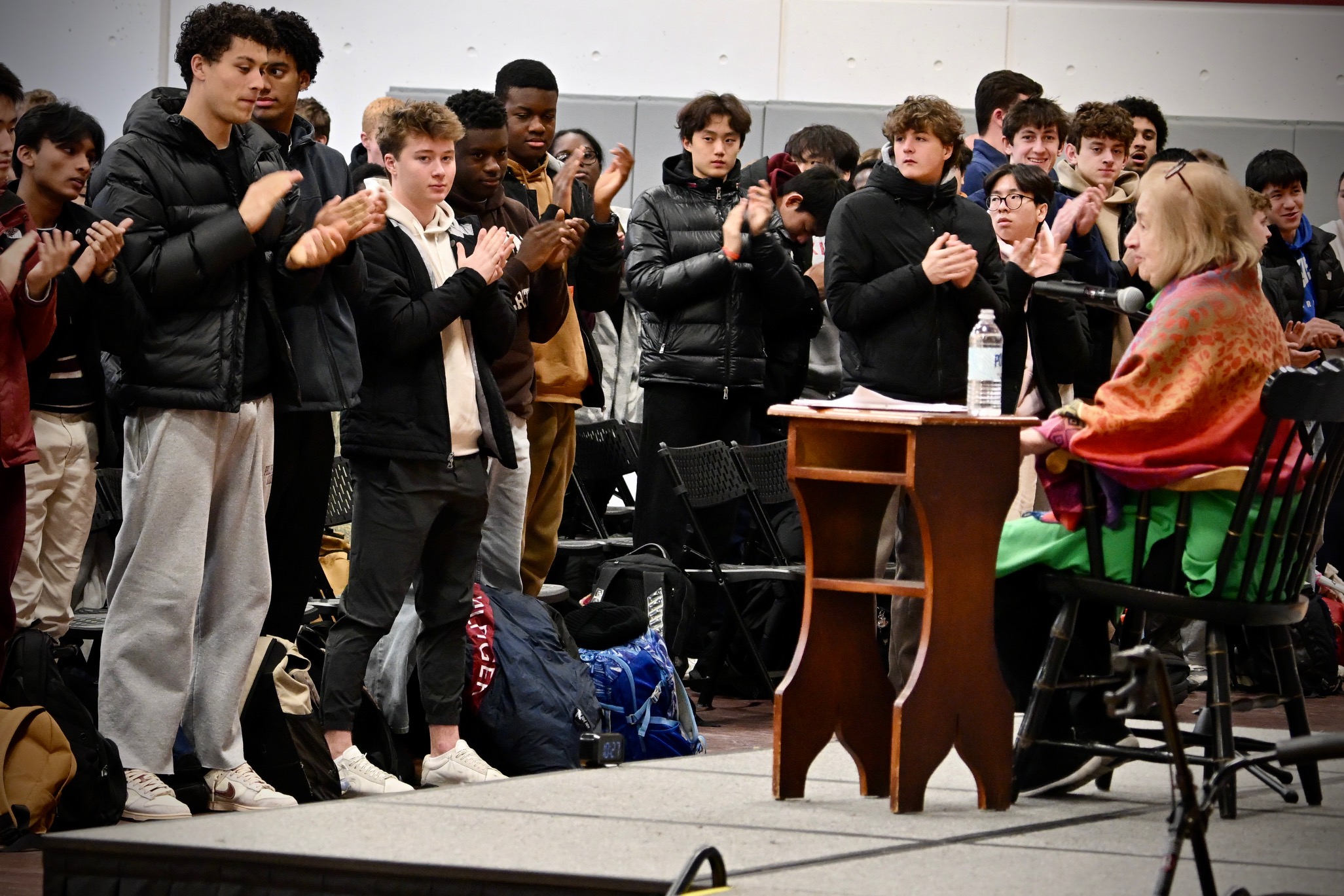
“It didn’t start with the gas chambers,” she said. “It took a lot of people to perpetrate this thing and I think, ultimately, I blame the bystanders. Because it took thousands of people to kill people, but it took millions of people to let it happen. Because they were silent.”
Preston’s closing message was one of hope. She admitted that she carried a heart “full of hatred” and a desire for revenge for five decades before finding peace.
“I worked very hard on that,” she said. “Love is about the only solution to all this. Please, don’t think that just because a tragedy happens it has to exterminate your personality.”
Preston urged her audience to never let the stories of the Holocaust fade away. She ended her address with a plea to remember those who have no memorial or graves, and to prevent the seeds of hatred from taking root in the modern world. “My plea to you is to please try to love each other,” she concluded. “We all have to stay together, because it didn’t just happen overnight.”