26 years on our screens? The real toll of digital distraction
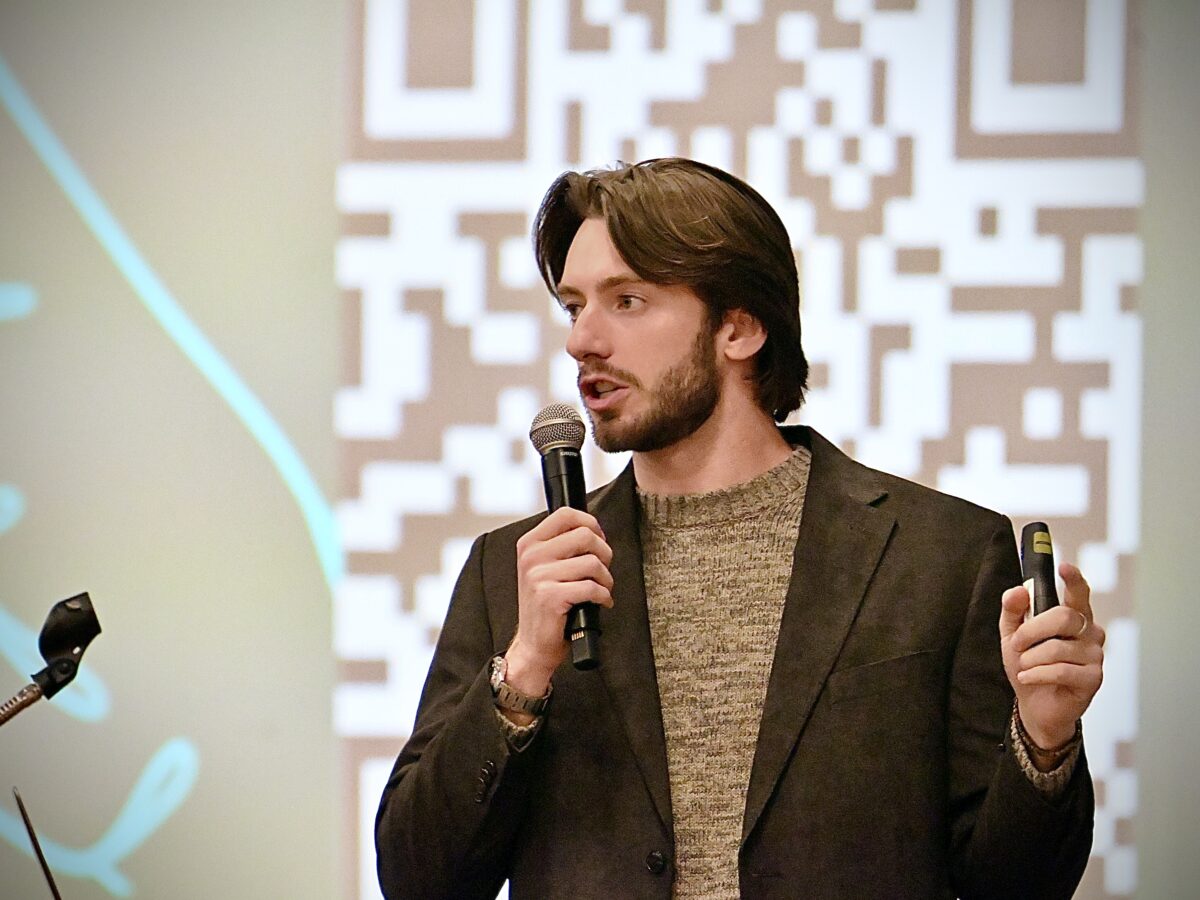
Project Reboot's Dino Ambrosi asks Exeter to rethink its relationship with its phones.
Dino Ambrosi has done the math, and it is frightening.
The founder of Project Reboot spoke to Exeter students Monday about how technology competes for their attention and how students can develop healthier digital habits, and no figure was more sobering to the audience than how much of their lives will be wasted staring at a phone screen.
“For someone who works a standard nine to five job until they are 65 years old, they would spend about 126 months actively working or studying. On average, about 18 will be spent driving, roughly 36 cooking and eating, about 36 doing chores and errands, and about 27 in the bathroom,” Ambrosi said. “And that leaves 334 months optimistically for everything else in your life.
“The average 18 year old is currently on pace to spend 312 of their remaining [334] months looking at a screen non-productively.”
Ambrosi, who himself overcame a screen addiction in college, is dedicated to revealing the role technology plays in the lives of today’s young people — and the consequences of allowing smartphones and social media to consume an ever-greater share of their attention. Drawing on research, student surveys and his own work helping young people develop healthier relationships with technology, Ambrosi challenged students to consider not just how much time they spend on their devices, but what that time may be displacing: face-to-face relationships, meaningful activities, opportunities for reflection and the simple experience of being present.
Ambrosi’s message was not that technology is inherently harmful or that students should abandon their devices altogether. Rather, he encouraged them to recognize how digital platforms are designed to capture and hold their attention, and to make more deliberate choices about when and how they engage with them. His presentation combined striking statistics about screen time and digital dependence with practical strategies for reclaiming attention and making room for a more intentional life.
Among the numbers that stand out:
8h 39m
Ambrosi cited Common Sense Media research finding that U.S. teenagers ages 13–18 average eight hours and 39 minutes a day on non-school-related screen activities, including social media, streaming video and video games. He emphasized that this figure excludes schoolwork and ordinary communication.
70%
Across anonymous polls at 65 schools, Ambrosi said roughly 70% of students agreed that they felt addicted to their phones. He used this figure to argue that the problem is widespread, not simply a matter of individual weakness or poor self-control.
$100B+
Ambrosi said Instagram, TikTok and YouTube generated more than $100 billion in the preceding year. His point: these services can be free to users because advertisers pay for access to their attention and data.
−70%
Citing figures for Americans ages 15–24, Ambrosi said young people in 2024 spent almost 70% less time hanging out in person than their peers did in 2003. He connected this decline to concerns about loneliness and the replacement of face-to-face relationships with digital interactions.
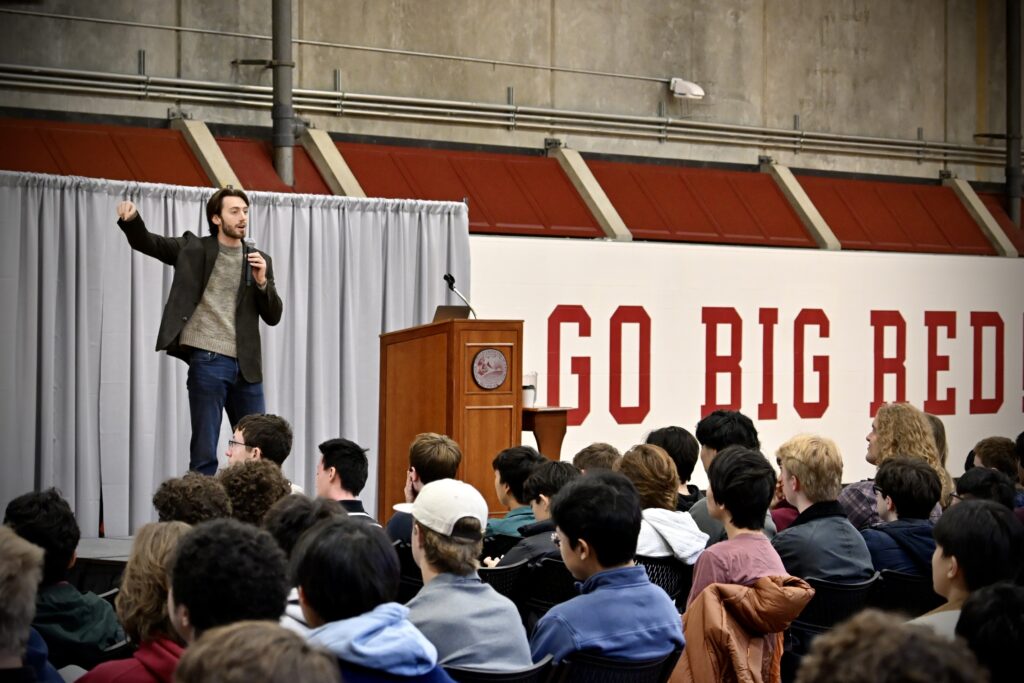
Dino Ambrosi believes people get addicted to escaping discomfort by seeking distraction, and phones are the shortest path we’ve ever had to distraction and the most potent form of it.
The good news? Ambrosi said better habits are possible — and productive. He said students in his original course at Cal-Berkeley reduced nonproductive screen time by an average of 3.5 hours per day. He also reported that a later course saw a 25% reduction in its digital-dependence measure, a 23% reduction in depressive symptoms and improvements for about 80% of students.
He’s living proof.
“I resonate with that. When I was addicted to social media, I could not care less about a sunset. It wasn’t that interesting to me anymore,” he said. “Conversations with my friends weren’t that compelling. As I’ve come out of it, every other part of life brings me more joy, and that is available to all of you.
“None of this time has been spent yet. It’s all still under your control. Recognize that this free time is your most valuable resource and do not give it away to social media companies for free.