2026 Graduation Remarks
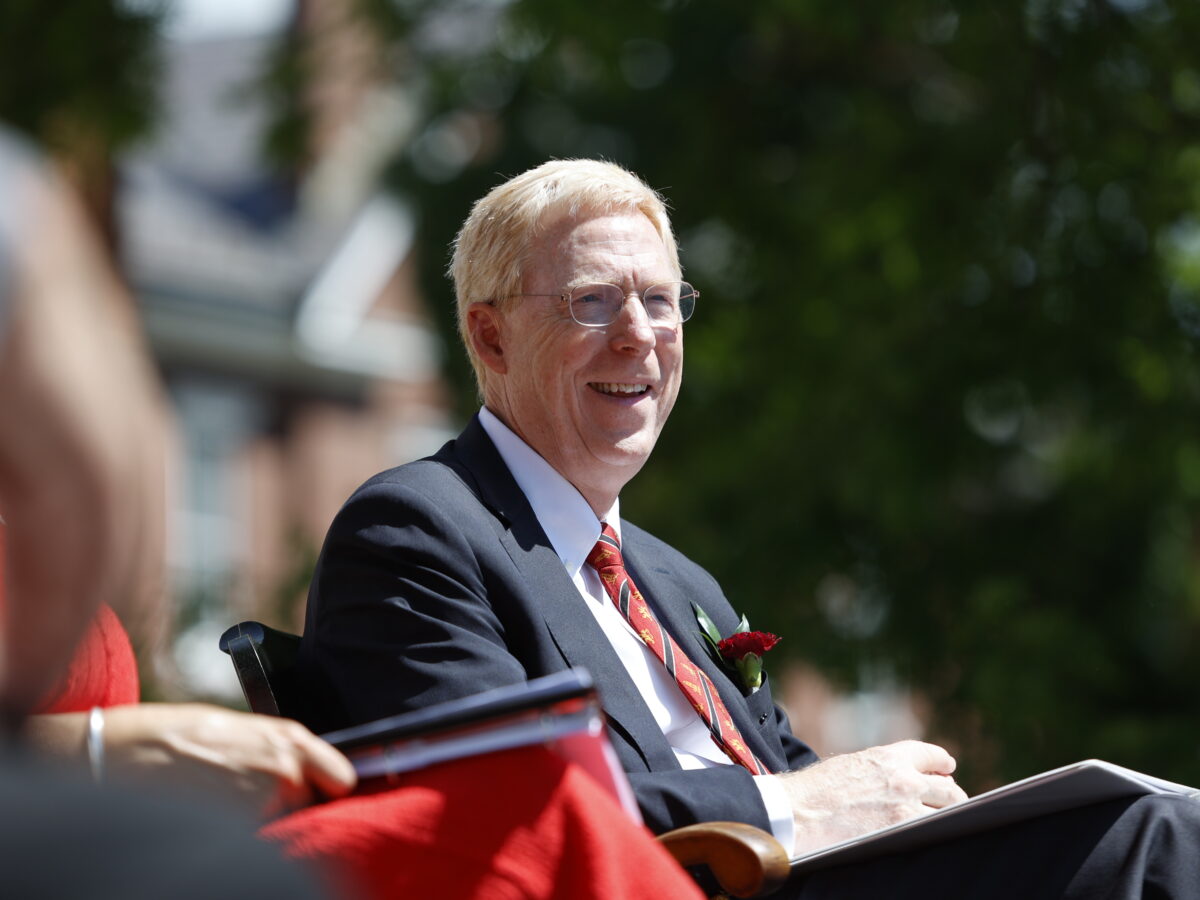
Members of the Class of 2026, it is now my privilege to deliver your farewell address.
First, parents, grandparents, and other family members who are gathered here today, thank you for giving this senior class the opportunity to attend Phillips Exeter Academy, and thank you for supporting them during their time here. You have given your children a great gift. You are right to be proud of all that they have accomplished during their time here, and all they have contributed to the life of the school. Thank you.
And now, seniors, congratulations! You did it! You succeeded at Exeter. I take great joy in celebrating with you today.
I often say I want you to aim high, have fun, and find joy in all that you do here. You have done so. It has not always been easy – Exeter is not supposed to be easy, and you have been quick to take on many challenges – but you met every challenge that you faced, and you always emerged stronger. You discovered new passions, developed new talents, and grew in confidence. You supported each other, celebrated each other, and contributed to each other’s learning and growth. Along the way, you made lifelong friends, and you made Exeter your home. You have every reason to celebrate and be joyful this morning.
As you reflect on your time here, it is important to remember why this school exists, and why you have been here. We are a private school with a public purpose: to unite goodness and knowledge and inspire youth from every quarter to lead purposeful lives.
John and Elizabeth Phillips founded Exeter almost 250 years ago because they believed youth was the important period in a person’s development. They believed that if youth from every quarter were imbued with knowledge and goodness at this school, then they would lead useful lives and make positive contributions in their communities.
We hold to that belief today. We believe that all of you can and will find ways to make a positive difference in the world, on whatever scale you choose, just as you have made a positive difference during your time at Exeter.
The words non sibi (not for oneself) are inscribed on our school seal because they represent the very spirit and purpose of our school.
Attending Exeter is an extraordinary privilege. With privilege comes opportunity, and with opportunity comes responsibility. In our core value of non sibi, we boldly state that we seek to graduate students who are motivated by their concern for others and the world around them, and who understand that an Exeter education should be used for the benefit of others as well as for oneself. We hope you will be inspired by this philosophy throughout your lives and strive always to make the world a better place not just for some, but for all.
Non sibi is not something that you do after you have been successful in life. Non sibi is how you are successful in life.
In time, you will find yourselves in leadership roles where you are expected to make decisions that affect other peoples’ lives. I hope you will always think of your decision-making authority not as power but as responsibility that you hold in trust for the benefit of others.
If you understand your authority as responsibility rather than power, then you will be more inclined to approach your responsibilities with humility and empathy. You will want to listen carefully and always understand how others will be impacted by the decisions that you make. You will want to make decisions that account for the needs and interests of all who will be affected by your decisions, not just those whom you might favor for one reason or another, and not leave anyone behind.
If you think of authority in this way, as responsibility held in trust for the benefit of others, then you likely will be asked to take on larger leadership roles with greater responsibility, and you thereby will have even greater opportunity to make a positive difference in the lives of those around you.
This is a non sibi approach to authority and leadership — the opposite of much of what we see in the world today.
I also hope you will always understand and take to heart the dignity of all work and the equal worth of every human life.
I trace my roots to the small town of Harrisville, Rhode Island, where my grandmother had to go back to work in the textile mill when her husband died young. The town was poor. Nobody had much money. None of my aunts and uncles went to college, but they and my grandmother taught me about hard work, integrity and respect. It was during visits to Harrisville that I learned to respect the dignity of all work and equal worth of every human life – values that were reinforced when I came to Exeter. Harrisville is where I developed my approach to life, which can be summed up as work hard and treat people well.
There is a large body of evidence which shows that people tend to have less empathy for persons whom they perceive as different from themselves. In a school, this is bad because it can interfere with learning together collaboratively. In the world at large, it is dangerous, because having less empathy for persons who appear different – valuing their lives less than you value your own — can be one step removed from being indifferent to their suffering, which can be another step removed from contributing to their suffering, which can be one more step removed from going to war. We have seen this throughout history, and we see it in the world today.
At Exeter, our diversity is a defining strength of our school that propels our learning and growth as individuals and as a community. Living with fellow students from around the world and from a wide range of backgrounds and experiences, you have experienced and understand in a deep way our common humanity. I hope you will be motivated by this understanding throughout your lives.
The lives that appear on the back pages of a newspaper are not worth less than the lives that appear on the front page.
It all comes back to knowledge and goodness. Our deed of gift states that goodness without knowledge is weak and feeble, yet knowledge without goodness is dangerous. United they form the surest foundation for usefulness to humanity.
As a society, we have many ways to measure knowledge. We have grades, diplomas, advanced degrees, prizes and awards, publications, and other ways that we recognize people for the knowledge they have acquired or created. People are often paid large sums of money for the knowledge they possess, which creates a powerful incentive to focus on knowledge acquisition and creation.
Yet, at the end of the day, when you look back on your lives, your sense of purpose and fulfillment will not be determined by the wealth you have accumulated or the accolades you have received. Your sense of purpose and fulfillment will be determined by how you have impacted the lives of others, how you have made a difference in the communities in which you live, and how you have made others feel along the way.
I have often said we are not special merely because we are here, but because we are here, we have the opportunity to do special things. Wherever you find yourselves next year, because you are Exonians, people will expect you to be capable and intelligent – they will be watching to see if you are kind and have humility. They will expect you to come with knowledge; they will be watching for your goodness.
I will conclude my remarks this morning with two final thoughts.
First, I hope you leave Exeter today with deep gratitude for the education that you have received, the transformative experiences that you have enjoyed, and the friendships that you have gained. In addition to your families and all adults on campus who have supported you during your time here, I hope your gratitude extends to prior generations of Exonians who have helped create and shape the Exeter of today, and who have thereby made your experiences here possible. In time, many of you will do the same for future generations of Exeter students.
Second, I hope you understand that you will always be Exonians. Your time as Exeter students is ending, but you will always belong to each other, and you will always belong here. I encourage you to return often to share your stories with your teachers and the school. By your examples, you will inspire future Exeter students to imagine their own possibilities.
Finally, on a personal note, I want to say I will always have great affection for the Class of 2026. Your class has great ability, great character, and great potential to do good work. I will be watching with keen interest to see what paths you choose and how you make a positive difference in the world.
To the Class of 2026, I wish you success and fulfillment in all your future endeavors. Congratulations.
With great joy, I present our newest alumni, the Class of 2026. Congratulations!