Life, leadership and non sibi
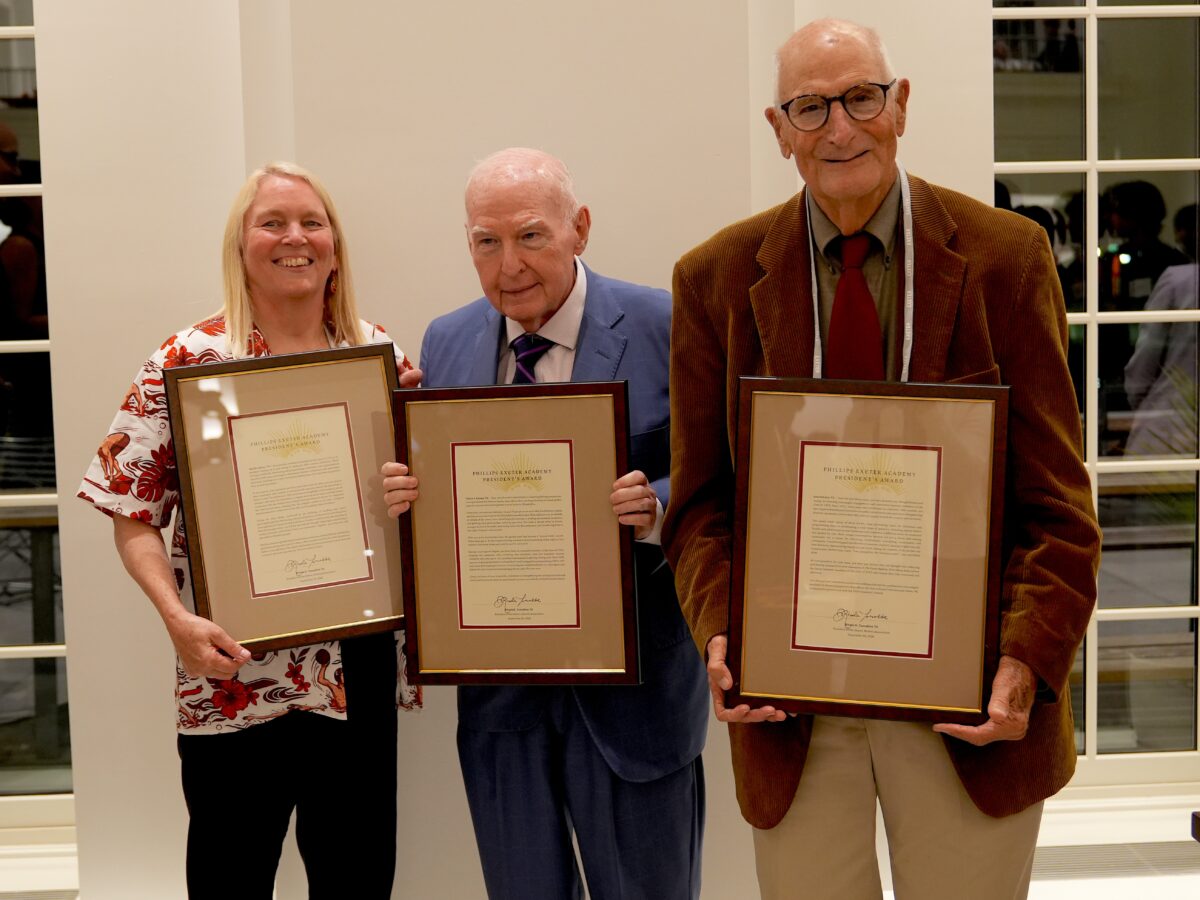
Reflections from the Exeter Alumni Association's 2026 President’s Award winners.
Under a brilliant pink dusk on a late September evening, finely dressed students and alumni make their way to the Hahn Center for the annual Senior Dinner.
Among the crowd are three distinguished Exonians recognized with the 2026 President’s Award: Lou DeLuca ’53, Cletus P. Lyman ’63 and Dr. Martha Nance ’76.
Representing over seven decades of Exeter history, these recipients embodied the Academy’s core ideal of non sibi. Sitting down for individual conversations before joining the graduating class of 2027, they shared their reflections on the lasting impact of Harkness, the evolution of alumni connections and the quiet wisdom they hoped to pass on to the next generation.
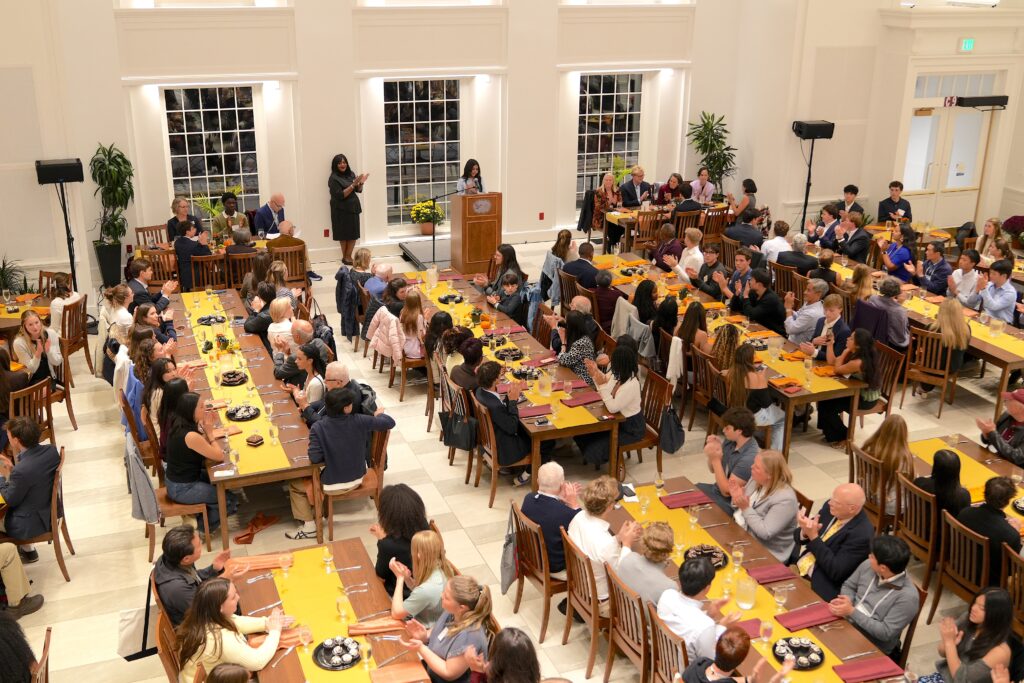
The annual Senior Dinner brings together members of the senior class and alumni on Exeter Leadership Weekend.
Lou DeLuca ’53: Building community across generations
For DeLuca, Harkness was initially intimidating. “When I got here, I came from a public school where you disappear in a class of 30 or 35. When I learned about the Harkness method, it frightened me in the beginning because I didn’t quite know how to join in a participatory discussion,” DeLuca recalled. “It was a way to learn by listening, and it’s been a part of my life ever since.”
That lifelong commitment to Harkness led DeLuca to start a monthly class Zoom call four and a half years ago to keep his classmates connected through COVID-19 and beyond. “We’ve had like 15 people gather one Tuesday a month… from Denver, California, Greece,” DeLuca shared. “We still talk as if it’s a Harkness table and learn from each other, even though we’re up there in the years.”
Serving as class correspondent for nearly 40 years, DeLuca offered timeless advice to seniors heading toward graduation: “It takes some work… volunteer! Do something. There are all these different ways to volunteer to help, and then you meet people that way, and it inspires you to come back to reunions and reconnect.”
Cletus P. Lyman ’63: Finding perspective and staying open
Lyman, who has served as class president, vice president, class agent and reunion chair, reflected on how Exeter completely altered his path in life. “The Academy changed things so much for me,” Lyman said. “I went to great institutions, Yale, Penn Law School, but they were not life-changing experiences. By the time I got to Yale, I was already set in many ways. I knew how to write, how to speak, how to collect my ideas… and that happened here at Exeter.”
As the longtime host of the iconic annual Philadelphia Alumni Garden Party, Lyman made a point of intentionally inviting recent graduates. “Older people enjoy meeting the younger people, so I do make a special effort to track down recent graduates,” he noted.
When asked what wisdom he would pass on to current seniors feeling the pressure of college applications, Lyman urged open-mindedness: “Stay open-minded about my future and not mentally commit to anything right at that stage.”
Dr. Martha Nance ’76: The power of human connection
Nance, a renowned neurologist specializing in Parkinson’s and Huntington’s diseases, credited Harkness with instilling her with the resilience needed for medical leadership. “You can’t hide when you’re sitting at a Harkness table, so you have to learn some degree of self-confidence,” Nance explained. “You keep doing things until you get it right, and then you feel more confident.”
Leading her class through its 50th reunion, Nance organized a touching moment during the class dinner where alumni made tribute gifts in honor of past mentors and lost classmates. “15 minutes later, people were raising their hands saying, ‘In memory of my roommate who died,’ or ‘It was my English teacher’… It was just remarkable hearing so many classmates raise their hands to tell little stories that had been sitting inside them for 50 years.”
Leaving seniors with a powerful standard for leadership and care, Nance shared: “The time to tell a person or a place that was important to you is when you’re both still there, when you’re both still alive. Our humanity consists of and is nourished by our meaningful connections with other people.”
As the interviews concluded and the award recipients walked to the Hahn Center to join the senior class, the shared thread of their lives became clear. While decades separate their time as students on campus, DeLuca, Lyman and Nance remain bound by a shared sense of gratitude and responsibility to the place where their journeys began. For the class of 2027, standing at the precipice of their own alumni journeys, the evening served as an uplifting testament: Exeter is not merely a four-year experience, but a lifelong table around which Exonians continue to gather, learn, and give back.